Pharmacology of Levocetirizine

Levocetirizine

Introduction Levocetirizine is a widely used second-generation H1-antihistamine, often prescribed for the management of allergic rhinitis, urticaria, and other allergic conditions. It is the active R-enantiomer of its racemic counterpart, cetirizine, a drug that has long been established in clinical practice. By isolating the pharmacologically more potent R-enantiomer, levocetirizine offers an improved therapeutic profile, characterized by high efficacy and reduced … Read more


Pharmacology of Linezolid

Linezolid

Linezolid is a synthetic oxazolidinone antibiotic indicated for serious Gram-positive bacterial infections, including those caused by methicillin-resistant Staphylococcus aureus (MRSA), vancomycin-resistant Enterococcus faecium (VRE), and penicillin-resistant Streptococcus pneumoniae. It is unique for its mechanism of action, broad tissue penetration, high oral bioavailability, and activity against multidrug-resistant pathogens. Chemical Structure and Properties Chemically, Linezolid is known … Read more

Pharmacology of Rivaroxaban

Pharmacology of Rivaroxaban

Introduction Rivaroxaban is an oral direct Factor Xa inhibitor widely used for the prevention and treatment of thromboembolic disorders. Developed as part of a newer generation of target-specific oral anticoagulants (TSOACs) or direct oral anticoagulants (DOACs), rivaroxaban offers several advantages over older agents such as warfarin and low-molecular-weight heparins. Marked by high specificity for Factor Xa, rivaroxaban effectively prevents conversion of prothrombin (Factor II) to thrombin (Factor IIa) in … Read more

Pharmacology of Vancomycin

Vancomycin

Introduction Vancomycin is a prominent glycopeptide antibiotic widely recognized for its efficacy in treating severe infections caused by Gram-positive bacteria, particularly methicillin-resistant Staphylococcus aureus (MRSA) and certain Clostridioides difficile (C. diff) infections. Its critical role in modern medicine stems from an increasing need to address challenging and resistant microbial pathogens that threaten patient safety in … Read more

Inflammatory Bowel Disease (IBD)

inflammatory bowel disease

Introduction Inflammatory Bowel Disease (IBD) is a chronic, relapsing-remitting inflammatory disorder of the gastrointestinal tract that primarily includes Crohn’s disease (CD) and ulcerative colitis (UC). Both conditions can produce significant morbidity, including abdominal pain, diarrhea (often with blood), weight loss, and systemic manifestations such as anemia. Thought to arise via an intricate interplay of genetic … Read more

Irritable Bowel Syndrome (IBS)

irritable bowel syndrome

Introduction Irritable Bowel Syndrome (IBS) is a chronic functional gastrointestinal disorder characterized by abdominal pain and altered bowel habits in the absence of any identifiable structural or biochemical abnormalities. IBS affects an estimated 5-15% of the global population, placing a considerable burden on healthcare systems and patients’ quality of life. Despite ongoing research, IBS remains … Read more

Gastroesophageal Reflux Disease (GERD)

GERD

I. Introduction Gastroesophageal reflux disease (GERD) is a chronic disorder characterized by the reflux of gastric contents into the esophagus, which leads to troublesome symptoms, mucosal injury, and, in some cases, serious complications such as strictures or Barrett’s esophagus. GERD is one of the most prevalent GI disorders globally, affecting up to 20% of adults in … Read more

Peptic Ulcer Disease (PUD) – A brief note

peptic ulcer disease - PUD

Introduction Peptic Ulcer Disease (PUD) is a gastrointestinal disorder characterized by sores or lesions in the lining of the stomach or duodenum. It is a significant health concern worldwide, affecting a broad demographic. Pathophysiology Peptic ulcers result from an imbalance between mucosal defensive factors (like mucus and bicarbonate secretion) and aggressive factors (such as gastric … Read more

Helicobacter pylori Infection and Treatment

helicobacter_pylori

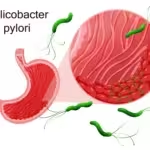
Introduction Helicobacter pylori (H. pylori) is a spiral-shaped, gram-negative bacterium that colonizes the human stomach and duodenum. First identified in the early 1980s, this organism quickly garnered attention due to its critical role in the pathogenesis of peptic ulcer disease, chronic gastritis, and certain types of gastric malignancies, notably gastric adenocarcinoma and mucosa-associated lymphoid tissue (MALT) … Read more

Zollinger-Ellison Syndrome (ZES)

ZE syndrome

I. Definition, Historical Perspective & Epidemiology Zollinger–Ellison Syndrome (ZES) is a rare disorder characterized by gastrin-secreting tumors (“gastrinomas”) of the pancreas or duodenum. These tumors lead to excessive gastric acid secretion, resulting in recurrent, treatment-resistant peptic ulcers, severe gastroesophageal reflux, and diarrhea.​ II. Pathophysiology 1. Gastrinoma Biology 2. Mechanism—Gastrin Overproduction 3. Resultant Clinical Effects III. Clinical … Read more