Pharmacology of Cephalosporin antibiotics

cephalosporins antibiotics

Cephalosporin antibiotics are beta-lactam antibiotics derived from Cephalosporium acremonium, classified by generations based on their antimicrobial spectra and pharmacokinetic properties. They are among the most utilized antibiotics globally, due to broad efficacy and good safety profile. I. Mechanism of Action Cephalosporins bind to bacterial penicillin-binding proteins (PBPs) and inhibit the final transpeptidation step of peptidoglycan synthesis in … Read more

Antimicrobial Drugs: All classes

antimicrobial

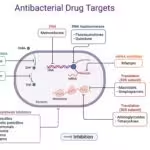
Antimicrobial agents can be broadly classified into six main categories: antibiotics, antivirals, antifungals, antiprotozoals, anthelmintics, and antiseptics. Antibiotics can be classified into several classes based on their chemical structure, mechanism of action, and spectrum of activity. Some of the major classes include: a. Beta-lactams: Examples: Penicillins (e.g., amoxicillin, penicillin G), cephalosporins (e.g., cephalexin, ceftriaxone), and … Read more

Pharmacology of Penicillins

penicillins

Introduction Among the most historically significant and widely used classes of antibiotics, penicillins have revolutionized the treatment of bacterial infections. Their discovery by Sir Alexander Fleming in 1928 laid the foundation for a new era in antimicrobial therapy. Since then, extensive research has led to the development of numerous penicillin derivatives, each tailored to broaden the spectrum … Read more

Tuberculosis and Its Treatment

Tuberculosis

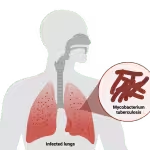
Introduction Tuberculosis (TB) remains a major global health threat, caused by Mycobacterium tuberculosis (M.tb), a slow-growing, aerobic, acid-fast bacillus with a unique, lipid-rich cell wall conferring virulence and intrinsic drug resistance. Diagnosis relies on acid-fast stains, culture, PCR, and clinical criteria. TB is primarily pulmonary but can affect any organ. Increased risk is seen in immunosuppressed individuals, … Read more