Introduction
Organophosphorus (OP) compounds, a broad class of chemicals primarily used as pesticides (insecticides) and, less ethically, as chemical warfare agents (nerve gases), pose a significant challenge in both developed and developing nations (Katzung, 2020). Poisoning from OP agents remains a leading cause of acute morbidity and mortality worldwide, particularly in rural settings where pesticides are extensively deployed in agriculture. Moreover, the deliberate misuse of highly potent organophosphorus agents highlights their dual potential for large-scale toxicity and public health threats (Rang & Dale, 2019).
The pharmacology of organophosphorus compound poisoning centers on the inhibition of acetylcholinesterase (AChE) in synapses and neuromuscular junctions, leading to the pathologic accumulation of acetylcholine (ACh) at cholinergic synapses. The resultant overstimulation of muscarinic and nicotinic receptors can induce life-threatening respiratory compromise, severe bronchorrhea, muscle fasciculations, and profound autonomic instability (Goodman & Gilman, 2018). Handling such poisonings requires a detailed comprehension of the mechanistic basis of OP toxicity, the therapeutic roles of atropine and pralidoxime, and supportive measures to ensure optimal patient outcomes.
This in-depth article explores the pharmacological foundations of organophosphorus poisoning, surveying the mechanism of toxicity, clinical manifestations, therapeutic interventions, and the rationale behind specific antidotes. Drawing primarily from “Goodman & Gilman’s The Pharmacological Basis of Therapeutics (13th Edition),” “Katzung BG, Basic & Clinical Pharmacology (14th Edition),” and “Rang & Dale’s Pharmacology (8th Edition),” it underscores the interdisciplinary strategies necessary to counteract OP-induced cholinergic crises.
Chemistry and Common Sources of Organophosphorus Compounds
Organophosphorus adsorbs or integrates a phosphorus moiety, typically bound to carbon and other substituents like oxygen or sulfur atoms. This structural core fosters potent anticholinesterase actions. Examples include:
- Agricultural insecticides: Parathion, Malathion, Diazinon, Chlorpyrifos.
- Nerve agents (chemical warfare): Sarin, Soman, VX.
Many OP pesticides require bioactivation in the liver (via cytochrome P450) to yield potent oxon derivatives capable of phosphorylating acetylcholinesterase. Even small exposures—through inhalation, ingestion, or dermal absorption—can provoke acute poisoning, with the degree of toxicity reflecting the agent’s lipid solubility, oxidative metabolism, and inherent reactivity toward target enzymes (Rang & Dale, 2019).
Mechanism of Toxicity
Acetylcholinesterase Inhibition
Organophosphorus compounds selectively phosphorylate the serine hydroxyl residue at the active site of acetylcholinesterase (AChE), preventing the breakdown of acetylcholine. Normally, AChE rapidly cleaves ACh into choline and acetate—terminating cholinergic signaling. By inhibiting AChE, OP agents allow ACh to accumulate at muscarinic, nicotinic, and central cholinergic synapses, producing overstimulation (Katzung, 2020).
Aging Process of Phosphorylated Enzyme
Following phosphorylation, the enzyme–inhibitor complex undergoes a process labeled “aging”, wherein one of the phosphoryl alkyl groups is cleaved spontaneously, reinforcing the phosphoryl-enzyme bond. Once “aged,” the enzyme is irreversibly inactivated, and oximes (like pralidoxime) can no longer regenerate AChE. The rate of aging varies among different OP compounds (Goodman & Gilman, 2018).
Cholinergic Overload
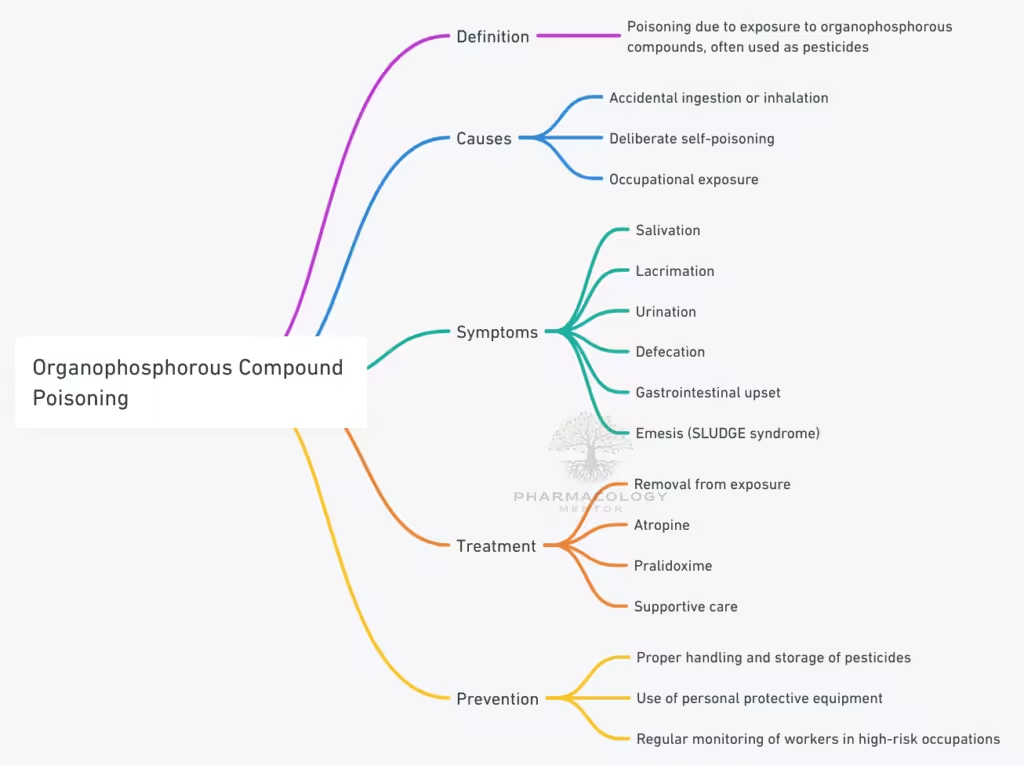
- Muscarinic Overstimulation: Excess ACh at parasympathetic (muscarinic) receptors triggers bronchoconstriction, bronchorrhea, salivation, lacrimation, urination, defecation, GI hyperactivity, emesis, miosis, bradycardia, and hypotension. Common mnemonics include SLUDGE (Salivation, Lacrimation, Urination, Defecation, Gastrointestinal upset, Emesis) and DUMBELS (Diarrhea, Urination, Miosis, Bronchospasm, Bradycardia, Emesis, Lacrimation, Salivation).
- Nicotinic Overstimulation: Accumulation of ACh at neuromuscular junction and autonomic ganglia leads to muscle fasciculations, weakness, paralysis, tachycardia (sometimes), and hypertension (occasionally).
- Central Nervous System Effects: Confusion, ataxia, convulsions, coma, respiratory depression. The lipid-soluble OP agents more readily cross the blood-brain barrier, intensifying CNS toxicity (Rang & Dale, 2019).
Clinical Manifestations of Organophosphorus Poisoning
Acute Presentation
Patients may arrive with:
- Severe Respiratory Distress: Bronchospasm, copious secretions, leading to acute respiratory compromise.
- Muscarinic Signs: Salivation, lacrimation, miosis, diarrhea, abdominal cramping, vomiting, urinary incontinence, bradycardia.
- Nicotinic Signs: Fasciculations, muscle cramps, weakness, potential paralysis. Tachyarrhythmias or hypertension can also appear briefly.
- Neurological: Anxiety, confusion, lethargy, seizures, or coma.
Rapid onset follows inhalation or IV exposure (minutes to an hour), whereas ingestion may delay onset by a few hours (Katzung, 2020).
Intermediate Syndrome
Occurring 1–4 days post-exposure, the Intermediate Syndrome is characterized by proximal muscle weakness, especially the neck flexors and respiratory muscles. This phase arises from persistent ACh receptor dysfunction at the neuromuscular junction. Without vigilance, the patient may develop delayed respiratory failure even after apparent initial improvement (Goodman & Gilman, 2018).
Organophosphate-Induced Delayed Polyneuropathy (OPIDP)
Several OP agents (e.g., leptophos) produce distal axonopathy ≥ 2 weeks after acute/frank or subclinical exposure. Patients experience progressive motor weakness, sensory deficits, promoting significant disability. OPIDP is hypothesized to involve inhibition of neuropathy target esterase (NTE), separate from cholinesterase inhibition (Rang & Dale, 2019).
Diagnosis and Evaluation
Clinical Suspicion
Any acute cholinergic crisis in an agricultural or chemical setting strongly suggests OP poisoning. Early recognition is critical—particularly for severe bronchorrhea and muscle weakness that may rapidly compromise airway function.
Laboratory Tests
- Red Blood Cell Cholinesterase (AChE): RBC enzyme parallels neural AChE. Typically decreased in OP poisoning.
- Plasma (Pseudo)Cholinesterase: More sensitive to certain OP compounds, but correlation to clinical severity can be variable.
- Muscarinic or Nicotinic Markers: If RBC and plasma cholinesterase are drastically reduced (<30% of normal), that’s strongly confirmatory (Katzung, 2020).
Differential Diagnosis
- Carbamate Poisoning: Another anticholinesterase but typically reversible, of shorter duration, and no aging phenomenon.
- Cholinergic Mushrooms (Muscarine): Can mimic muscarinic overactivity but lacks robust nicotinic or CNS features.
- Poisoning with Other Agents/Chemical Weapons: E.g., nerve gases, though these are also OP-based or have similar effects (Rang & Dale, 2019).
Principles of Treatment for Organophosphorus Poisoning
1. Decontamination and Supportive Care
- Remove Contaminated Clothing: Thorough washing of skin/eyes prevents further absorption.
- Maintain Airway: Suction secretions, intubate if necessary. Ventilatory support is vital if respiratory muscles are compromised.
- IV Access, monitor vital signs, ECG for arrhythmias, and continuous pulse oximetry.
2. Pharmacological Antidotes
Atropine
A competitive muscarinic antagonist, atropine counters the effect of excessive ACh at muscarinic receptors (Goodman & Gilman, 2018). Key considerations:
- Dosing: Titrate IV atropine in repeated boluses (1–2 mg in adults, repeated every 5–15 minutes) until drying of bronchial secretions and resolution of bronchospasm. Tachycardia is not always an endpoint; the main objective is to relieve respiratory compromise.
- Duration: Continued infusion might be needed due to ongoing OP presence and slow OP clearance.
- Limitations: Atropine does not alleviate nicotinic symptoms (muscle weakness, fasciculations, paralysis) (Katzung, 2020).
Oximes (Pralidoxime)
Pralidoxime (2-PAM) reactivates phosphorylated acetylcholinesterase by cleaving the phosphoryl group—provided aging has not occurred. Effects:
- Restores function at nicotinic junctions, reversing muscle weakness and fasciculations.
- Less effect on central cholinergic sites, as pralidoxime is a quaternary compound not crossing the BBB significantly under normal conditions.
- Must be given early (ideally within minutes to a few hours of exposure) to avoid permanent enzyme aging.
- Typical intravenous bolus (1–2 g in adults) repeated or infused continuously. Overly rapid administration can induce transient hypertension or neuromuscular blockade (Rang & Dale, 2019).
The concerted administration of atropine plus pralidoxime forms the foundation of acute OP management.
Other Oximes
Alternatives such as obidoxime or HI-6 are used in certain regions or specialized contexts (nerve gas exposure). Their availability varies globally (Goodman & Gilman, 2018).
3. Adjunctive Medications
- Benzodiazepines (e.g., diazepam): For seizures or marked anxiety.
- Bronchodilators: If bronchospasm remains severe.
- Corticosteroids: Sometimes employed, though evidence is inconsistent for directly mitigating OP toxicity.
4. Specific Supportive Interventions
- Electrolyte and Fluid Management: Correct dehydration or electrolyte imbalances from diarrhea/vomiting.
- Monitoring for Intermediate Syndrome: Evaluate muscle strength, respiratory function daily for ~4 days post-poisoning.
- ICU Monitoring: Prolonged observation often required for severe poisonings (Katzung, 2020).
Pharmacology of Antidotes
Atropine: Mechanism and Effects
An anticholinergic agent that binds to muscarinic receptors (M1, M2, M3, etc.), atropine prevents ACh from exerting parasympathetic effects in smooth muscle, exocrine glands, and the heart. With a high affinity for muscarinic receptors, atropine counters bronchial hypersecretion, bronchoconstriction, bradycardia, GI hypermotility—yet spares nicotinic components (Goodman & Gilman, 2018).Key atropine points:
- Onset: Rapid if given IV; improvement in bronchial secretions can be dramatic within minutes.
- Side Effects: Tachycardia, dry mouth, flushed skin, urinary retention, delirium (central anticholinergic syndrome).
- Toxic Overdose: Potential atropine delirium; clinically balanced with the emergent need to rescue respiration in OP poisoning (Rang & Dale, 2019).
Pralidoxime: Mechanism and Nuances
2-PAM exerts strong nucleophilic activity, targeting the OP moiety bound to AChE’s active-site serine residue. By displacing OP from the enzyme prior to aging, 2-PAM can restore cholinesterase catalytic function:
- Nicotinic Symptom Relief: Reversal of muscle weakness, fasciculations is especially critical for sustaining respiration.
- Time Dependency: Diminishing benefit once aging locks the enzyme–OP complex irreversibly.
- Limitations: Poor CNS penetration in standard formulations; partial improvement in CNS signs if the blood-brain barrier is compromised or at very high doses.
- Adverse Effects: Overzealous dosing may cause neuromuscular blockade or transient muscle weakness (Katzung, 2020).
Management of Severe Poisoning: Protocols and Practice
Resuscitation and Stabilization
On arrival, the ABC (Airway, Breathing, Circulation) approach remains paramount. Administer high-flow oxygen, suction airway secretions, and if necessary, intubate early to avert hypoxia from airway compromise. Large-bore IV lines allow rapid fluid resuscitation, atropine boluses, and if indicated, continuous infusions (Goodman & Gilman, 2018).
Rapid Administration of Antidotes
Simultaneous or sequential injection of atropine and pralidoxime is standard for moderate to severe OP poisoning:
- Atropine is given in repeated IV boluses until muscarinic symptoms (especially respiratory) are controlled (clear lungs, heart rate ~80–100/min, improved oxygenation).
- Pralidoxime starts early (1–2 g IV over 15–30 minutes in adults), repeated if clinical improvement is inadequate or if RBC cholinesterase remains profoundly low (Rang & Dale, 2019).
Monitoring of Response
Frequent reassessment is essential to gauge the adequacy of therapy:
- Respiratory Improvement: Diminished secretions, improved ventilation, stable oxygen saturations.
- Reduction in Salivation, Sweating: Reflecting reduced muscarinic hyperactivity.
- Muscle Strength: Observer for improvement in fasciculations or limb/respiratory muscle power.
- Blood Pressure, Heart Rate: Overcoming bradycardia, monitoring for atropine-induced tachycardia (Katzung, 2020).
If no response to atropine is observed, recheck the correctness of diagnosis (e.g., if it’s not OP or a very high dose requiring huge atropine volumes). Resist the temptation to rely solely on heart rate to gauge atropine end-point—secretions and respiratory parameters are more reliable side-limit indices (Goodman & Gilman, 2018).
Continuous Infusion Versus Repeated Bolus
Once a loading dose stabilizes symptoms, some protocols advocate for a continuous atropine infusion to maintain a consistent therapeutic level. Pralidoxime might also be administered as infusion to maintain stable plasma levels and prevent re-blockade of the enzyme if OP is still present externally or recirculating (Rang & Dale, 2019).
Complications and Prognosis
Respiratory Failure
High volumes of secretions, bronchial constriction, and diaphragmatic/intercostal muscle weakness converge toward ventilatory compromise. Prompt intubation and mechanical ventilation are crucial for survival in severe cases (Katzung, 2020).
Intermediate Syndrome
As noted, ~10–40% of patients may develop muscle weakness 24–96 hours after initial presentation, risking delayed respiratory failure. Vigilant observation and supportive therapy are mandatory.
Cognitive and Neurological Sequelae
Some survivors experience prolonged neuropsychological or motor deficits from organophosphate-induced delayed neuropathy or from severe hypoxia during the acute phase. Rehabilitative and neurological follow-up are recommended (Goodman & Gilman, 2018).
Mortality and Morbidity
Without timely treatment, mortality can be high, particularly with potent OP agents or in resource-limited settings. Adequate supportive care, early atropine and pralidoxime, plus robust ICU management significantly lower mortality.
Prevention and Public Health Perspective
Safe Handling and Regulation
- Proper PPE (Personal Protective Equipment): Gloves, masks, protective suits during pesticide handling.
- Restricted Access: Minimizing the availability of extremely toxic OP formulations to reduce accidental or suicidal exposures.
- Farmer Education: On mixing procedures, safe disposal, and first-aid measures in case of spills.
Surveillance and Reporting
Many countries require tracking of pesticide poisonings to identify crisis trends and ensure timely regulatory interventions. Enhanced toxicovigilance can help address emergent issues with counterfeit or unlicensed OP products (Rang & Dale, 2019).
Medical Preparedness
Health facilities in agricultural regions should be equipped with atropine and oximes in adequate stock, plus staff training on OP poison management and advanced critical care readiness (Katzung, 2020).
Recent Advances and Research
Novel Oxime Derivatives
Efforts to develop next-generation oximes with superior BBB penetration and broader reactivation potential continue. Agents like obidoxime or HI-6 show promise, especially in nerve agent exposures, although cost and availability limit routine use (Goodman & Gilman, 2018).
Bioscavengers
Investigational strategies, such as using recombinant enzymes (e.g., butyrylcholinesterase) that scavenge OP molecules in the bloodstream, might offer prophylactic or early post-exposure relief. This approach is under exploration for military or high-risk occupational scenarios (Rang & Dale, 2019).
Gene Therapy
Future concepts revolve around genetically enhancing endogenous cholinesterase or protective proteins in vulnerable populations. Such advanced therapies remain in preclinical or conceptual phases (Katzung, 2020).
Special Clinical Scenarios
Pediatric Exposures
Children present similarly but can exhibit more pronounced CNS involvement (seizures, confusion). Body-surface-area differences raise the risk of dermal absorption from accidental contact. Dosing of atropine and pralidoxime must be weight-based, carefully titrated to effect (Goodman & Gilman, 2018).
Pregnancy
OP poisoning in pregnant women threatens both maternal and fetal viability. The synergy of cholinergic crisis, potential for preterm labor, and the uncertain safety margin of high-dose atropine or oximes complicates management. Aggressive supportive therapy remains mandatory, balancing maternal/fetal risks (Rang & Dale, 2019).
Nerve Agent Attacks
Civilian or military nerve agent exposures (e.g., Sarin, VX) mirror OP pesticide poisoning but are often more acute or lethal due to higher potency and aerosolized dissemination. Rapid administration of atropine and pralidoxime—facilitated by auto-injectors—plus use of advanced oximes or supportive ventilation can mitigate casualties (Katzung, 2020).
Summary of Treatment Algorithm
- Immediate Decontamination: Remove clothing, wash skin, ensure personal protective measures.
- Support Airway and Breathing: Oxygen, suction, early intubation as needed.
- Atropine: Titrate IV bolus until bronchial secretions are controlled, then maintain with repeated boluses or infusion.
- Pralidoxime (2-PAM): Administer promptly (1–2 g IV) to restore nicotinic function, repeat if necessary.
- Benzodiazepines for seizures.
- Supportive: IV fluids, correct electrolyte imbalances, manage arrhythmias, monitor for intermediate syndrome.
- Observation: At least 48–72 hours, ensuring stable muscle strength, no delayed respiratory compromise (Goodman & Gilman, 2018).
Conclusion
Organophosphorus compound poisoning embodies a globally significant toxicological emergency, manifesting through potent acetylcholinesterase inhibition and subsequent cholinergic crisis. The resulting cluster of muscarinic, nicotinic, and central signs demands rapid diagnosis and therapeutic action. Atropine, by countering muscarinic hyperactivity, and pralidoxime (2-PAM), by regenerating inhibited AChE (before aging), form the mainstay of antidotal therapy. However, success pivots on early intervention, robust supportive care (especially respiratory management), and vigilant follow-up to detect secondary complications like the intermediate syndrome or delayed neuropathy (Rang & Dale, 2019).
Widespread OP usage in agriculture underscores the need for concerted preventive strategies—better pesticide regulations, farmer education, and improved first responder readiness. Advances in oximes, bioscavengers, and potential gene therapies herald future expansions in therapeutic modalities. For now, familiarity with the pharmacology of OP agents, meticulous supportive measures, and skilled administration of atropine + pralidoxime remain indispensable for combatting organophosphorus poisoning and saving lives (Katzung, 2020).
References (Book Citations)
- Goodman & Gilman’s The Pharmacological Basis of Therapeutics, 13th Edition.
- Katzung BG, Basic & Clinical Pharmacology, 14th Edition.
- Rang HP, Dale MM, Rang & Dale’s Pharmacology, 8th Edition.
OP poiosoning
📚 AI Pharma Quiz Generator
🎉 Quiz Results
Medical Disclaimer
The medical information on this post is for general educational purposes only and is provided by Pharmacology Mentor. While we strive to keep content current and accurate, Pharmacology Mentor makes no representations or warranties, express or implied, regarding the completeness, accuracy, reliability, suitability, or availability of the post, the website, or any information, products, services, or related graphics for any purpose. This content is not a substitute for professional medical advice, diagnosis, or treatment; always seek the advice of your physician or other qualified health provider with any questions you may have regarding a medical condition and never disregard or delay seeking professional advice because of something you have read here. Reliance on any information provided is solely at your own risk.