
Introduction
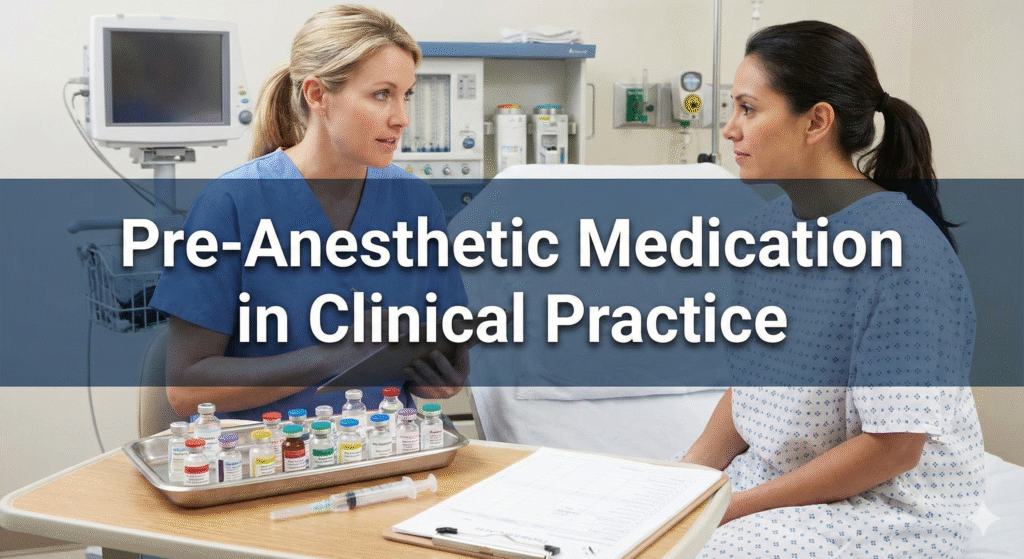
Pre-anesthetic medications (premedicants) have been integral to anesthetic practice since the early days of surgical anesthesia. Their rational use is essential for improving patient comfort, reducing perioperative morbidity, minimizing anesthetic requirements, and managing surgery-related stress responses. These drugs are selected based on individual patient factors, surgical procedure, type of anesthesia planned, and institutional protocols.
Historical Context and Evolution
The concept of administering medication before anesthesia predates modern anesthetic agents. Inhalational agents like ether and chloroform, once used alone, posed significant risks—hence, sedatives, anticholinergics, and opioids were introduced to optimize anesthesia and reduce complications such as secretions and vagal reflexes. Contemporary premedication strategies have broadened to include anxiolytics, antiemetics, and cardiovascular medications, all tailored to advances in anesthesia safety and patient-centered care.
Goals of Pre-Anesthetic Medication
The selection of pre-anesthetic agents is dictated by the following objectives :
- Relief of anxiety (anxiolysis) and production of sedation.
- Amnesia and prevention of distressing intraoperative recall.
- Reduction of secretions in the respiratory and digestive tracts.
- Prevention of undesirable autonomic and reflex responses (vagal inhibition, attenuation of hemodynamic responses).
- Provision of perioperative analgesia.
- Prevention of postoperative nausea and vomiting (PONV).
- Reduction in the requirements for general anesthetics.
- Minimization of aspiration risk in high-risk patients.
Drug choice, dosage, and timing depend on age, comorbidities, mental status, and the specific type of surgery.
Classification of Pre-Anesthetic Medications
Premedicants are broadly categorized as:
Detailed Discussion of Major Drug Classes
Sedative-Hypnotics
Benzodiazepines
Benzodiazepines like midazolam, diazepam, and lorazepam are critically important for anxiolysis and amnesia. Midazolam is favored for its rapid onset, short duration, and strong safety profile.
- Mechanism: Potentiate GABA_A receptor activity, enhancing neuronal inhibition.
- Clinical Use: Preoperative anxiety reduction, sedation, anterograde amnesia.
- Dosing: Oral midazolam 0.25–0.5 mg/kg; intravenous for rapid effect.
- Adverse Effects: Excessive sedation, respiratory depression, paradoxical agitation.
- Child Considerations: Midazolam used intranasally or orally for pediatric anxiolysis.
Barbiturates
Phenobarbital and thiopentone are rarely used today due to superior alternatives with fewer adverse effects. Historically, they provided sedation and hypnosis but posed risk of respiratory and cardiovascular depression.
Opioid Analgesics
Opioids—morphine, pethidine (meperidine), fentanyl—are given preoperatively for analgesia and to reduce the anesthetic requirement.
- Mechanism: Agonists at μ-opioid receptors in CNS.
- Clinical Use: Preemptive analgesia, adjunct to anxiolytics.
- Risks: Respiratory depression, nausea/emesis, constipation, pruritus.
- Dosing: Pethidine 25 mg, morphine 0.1–0.2 mg/kg IM or IV additive to midazolam.
Anticholinergic Agents
Anticholinergics mitigate vagal reflexes, reduce bradycardia and decrease salivation.
- Drugs: Atropine, glycopyrrolate (preferred for less CNS penetration), scopolamine.
- Mechanism: Muscarinic receptor antagonism—vagolytic and antisialagogue effects.
- Indication: Surgery involving significant salivation, pediatric cases, and where neuromuscular blockers used.
- Dosing: Glycopyrrolate 0.2 mg IV common; less tachycardia and CNS effects than atropine.
- Side Effects: Tachycardia (more via atropine), blurred vision, dental caries (long-term use), confusion (elderly; primarily with central agents).
Antiemetics
The risk of postoperative nausea and vomiting (PONV) can be substantial, impacting patient recovery and satisfaction. Commonly used drugs:
- 5-HT3 Antagonists: Ondansetron is effective and safe; standard adult dose is 4–8 mg IV.
- Dopamine Antagonists: Metoclopramide 10–20 mg IV; risk of extrapyramidal side effects.
- Steroids: Dexamethasone 4–8 mg IV at induction is often used.
- Others: Prochlorperazine, antihistamines.
Antiulcer Agents
To reduce aspiration pneumonitis risk in high-risk cases (full stomach, emergency surgery), acid-suppressants and prokinetics are utilized.
- H2 Blockers: Ranitidine 50 mg IV preop.
- Proton Pump Inhibitors (PPIs): Pantoprazole 40 mg IV preop.
- Non-particulate Antacids: Sodium citrate.
- Prokinetics: Metoclopramide enhances gastric emptying and reduces gastric volume.
α2-Adrenergic Agonists
Clonidine and dexmedetomidine are increasingly used for their sedative, anxiolytic, analgesic, and sympatholytic actions.
- Mechanism: Stimulation of central α2 receptors inhibits sympathetic outflow and enhances endogenous analgesia.
- Clinical Use: Pre-op anxiolysis, attenuation of stress response, reduction of intraoperative anesthetic/analgesic needs.
- Dosing: Clonidine 3–4 µg/kg PO in children; dexmedetomidine 1 µg/kg IV.
- Adverse Effects: Bradycardia, hypotension.
NMDA Antagonists (Ketamine)
Ketamine is unique for its dissociative anesthesia, profound analgesia, and minimal respiratory depression.
- Mechanism: NMDA receptor antagonism in CNS; maintains airway reflexes.
- Clinical Use: Uncooperative children, those at risk for bronchospasm, patients with shock.
- Dosing: IM 4–6 mg/kg, IV 0.5–1 mg/kg for children.
- Adverse Effects: Hallucinations, emergence delirium, increased salivation (sometimes paired with glycopyrrolate).
Other Agents
- Antibiotic Prophylaxis: Administered per surgical protocol, often at induction.
- Antihypertensives/β-blockers: For cardiovascular stability in high-risk patients.
- Melatonin: Investigated as an anxiolytic in pediatric populations.
- Chloral Hydrate: Rare, pediatric anxiolytic, risk of respiratory depression.
Selection Criteria and Dosing Principles
Patient Assessment
Selection of pre-anesthetic medication requires a thorough preoperative evaluation:
- Patient Factors: Age, sex, weight, psychological state, medical comorbidities (e.g., hepatic/renal dysfunction, cardiovascular risk), medication history.
- Surgical Factors: Type, duration, and invasiveness of surgery; anticipated pain and discomfort.
- Anesthetic Plan: General vs. regional, need for airway manipulation, predicted anesthesia depth, anticipated hemodynamic changes.
- Allergies and Contraindications: Ensure no history of adverse reactions.
Route and Timing of Administration
- Oral Route: Most common for anxiolytics and antacids—given 60–90 minutes before induction.
- Intravenous/Intramuscular: Chosen for rapid onset, especially in hospital-based and pediatric cases, or when patient cannot take oral medications.
- Intranasal, Rectal: Used primarily in pediatric or uncooperative patients.
- Transdermal or Subcutaneous: Rarely, for agents like scopolamine patch.
Pre-Anesthetic Medication in Special Populations
Pediatric Patients
Goals center around anxiolysis, smooth parental separation, and reduction of physiological stress. Dosing is always weight-based. Sedative choices (e.g., midazolam, ketamine, dexmedetomidine), and administration routes (oral, nasal, rectal) are tailored for cooperation, pain, and vomiting risk.
Geriatric Patients
Older adults are more sensitive to sedatives and opioids. There is increased risk for delirium, hypotension, and respiratory depression, so drug doses are reduced and short-acting agents are favored.
Pregnant Patients
Premedicants must avoid teratogenicity and respiratory depression in the fetus. Non-pharmacological methods are preferred unless otherwise indicated. If used, choices must be judicious.
Patients with Comorbidities
Patients with cardiac, hepatic, or renal dysfunction, obstructive sleep apnea, or psychiatric illness require careful selection and dosage adjustment to avoid adverse outcomes.
Recent Evidence and Trends
Recent studies emphasize multimodal premedication to minimize opioid use, individualize therapy, and optimize perioperative outcomes. There is also increasing use of dexmedetomidine for its opioid-sparing and hemodynamic stabilizing properties, and expanded use of preoperative antiemetics following risk-stratification protocols.
Commonly Used Pre-Anesthetic Drugs: Doses and Protocols
Complications and Risk Mitigation
Premedicants, like all potent drugs, carry potential for adverse effects:
- Respiratory depression: additive with benzodiazepines and opioids.
- Over-sedation and airway compromise.
- Paradoxical reactions: especially with benzodiazepines in some pediatric/elderly patients.
- Anticholinergic delirium: scopolamine risk higher than glycopyrrolate.
- Drug interactions: synergistic or antagonistic with concurrent chronic medications.
- Hemodynamic instability: bradycardia, hypotension, arrhythmias (α2-agonists, anticholinergics).
- Aspiration risk: timing and selection of antiulcer drugs essential.
Adverse effects are minimized by adhering to evidence-based protocols, patient-specific dose calculations, and vigilant perioperative monitoring.
Conclusion
Pre-anesthetic medication remains a critical facet of safe and effective anesthesia care. By thoughtfully selecting agents based on patient, surgical, and pharmacological factors, anesthesiologists can optimize not only patient comfort but also perioperative and postoperative outcomes. An individualized, multimodal approach supported by up-to-date clinical evidence, and strict adherence to monitoring and safety principles, defines best practice in modern anesthetic premedication.
References
- Shah R, Parajuli SB, et al. “Utilization of Pre-Anesthetic Medications for Major Surgical Procedures.” Journal of Medical Research, 2020.
- Shin HW, et al. “Preanesthetic dexmedetomidine 1 µg/kg single infusion is effective for sedation and stable hemodynamics.” Anaesthesia, Pain & Intensive Care, 2013.
- Dave NM. “Premedication and Induction of Anaesthesia in Paediatric Patients.” Anaesthesia Essays and Researches, 2018.
- Ko JC. “Preanesthetic medication: drugs and dosages.” Textbook of Veterinary Anesthesia (Taylor & Francis), 2018.
- Cambridge University Press. “Section 3 – Essential drugs in anesthetic practice.” Anesthetic Pharmacology, 2011.
- Slideshare. “Preanaesthetic medication & general anaesthetics.” Slideshare (PPTX), 2014.
- StatPearls Publishing. “General Anesthesia for Surgeons” and “Anesthetic Gases” (StatPearls), 2025.
- NBE India. “DNB-Anesthesia Curriculum.” National Board of Examinations, India.
- ScienceDirect. “Pharmacology and Physiology for Anesthesia.” Elsevier, 2017.
- Barber N. “Principles of Anaesthesia: Premedication.” Journal of Anaesthesia, 2002.
This chapter is intended for educational purposes. For detailed clinical practice, always cross-check with updated, local, and institutional protocols and guidelines, and consult original sources as per citation list.
📚 AI Pharma Quiz Generator
🎉 Quiz Results
Medical Disclaimer
The medical information on this post is for general educational purposes only and is provided by Pharmacology Mentor. While we strive to keep content current and accurate, Pharmacology Mentor makes no representations or warranties, express or implied, regarding the completeness, accuracy, reliability, suitability, or availability of the post, the website, or any information, products, services, or related graphics for any purpose. This content is not a substitute for professional medical advice, diagnosis, or treatment; always seek the advice of your physician or other qualified health provider with any questions you may have regarding a medical condition and never disregard or delay seeking professional advice because of something you have read here. Reliance on any information provided is solely at your own risk.

it is so helpful
it is helpful and learning material for my carrier.
Thanks for your valuable feedback!