The Vomiting Centre and the Chemoreceptor Trigger Zone (CTZ)
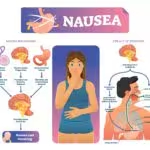
CTZ role in nausea and vomiting

1 ยท Introduction Vomiting (emesis) is an evolutionarily conserved defence reflex that forcefully expels gastricโ€”and at times intestinalโ€”contents through the mouth. Although the motor act seems singular, it is orchestrated by a distributed brain-stem network that integrates sensory danger signals from the gut, the bloodstream, the vestibular system and higher cortical areas. Two functional loci dominate … Read more
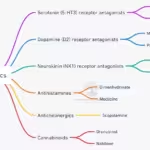

Pharmacology of antiemetic drugs

Pharmacology of Antiemetic Drugs

Introduction Nausea and vomiting are protective reflexes designed to prevent the ingestion or continued digestion of harmful toxins. However, when severe, they can significantly deteriorate patient comfort, compromise treatment adherence, and lead to complications such as electrolyte imbalances, dehydration, and undernutrition. Antiemetic drugs play a critical role across various clinical contextsโ€”perioperative care, chemotherapy, radiation therapy, infectious gastroenteritis, … Read more

Pharmacology of Penicillins

penicillins

Introduction Among the most historically significant and widely used classes of antibiotics, penicillins have revolutionized the treatment of bacterial infections. Their discovery by Sir Alexander Fleming in 1928 laid the foundation for a new era in antimicrobial therapy. Since then, extensive research has led to the development of numerous penicillin derivatives, each tailored to broaden the spectrum … Read more

Methanol Poisoning: Symptoms and Management

methanol poisoning

Methanol (methyl alcohol, wood alcohol) is a simple aliphatic alcohol with significant toxicological importance. It is colorless, volatile, and commonly used as a solvent, antifreeze, fuel, and in industrial chemical processes. Accidental or intentional ingestion of methanol, as well as inhalation or dermal exposure, can result in severe toxicity and death. The cardinal feature of … Read more