Routes of Drug Administration

routes of drug administration

Introduction The administration of drugs is an essential aspect of medical practice. It involves the process of delivering medication to a patient’s body through various routes. The appropriate route of administration for a given situation depends on several factors, including the drug’s physical and chemical properties and patient-related factors. This chapter discusses the different routes … Read more

Dosage Forms of the Drugs

dosage forms of the drugs

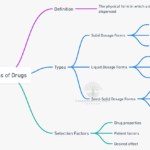
Introduction Drugs can be formulated into a wide variety of dosage forms to achieve the desired therapeutic effect. The choice of dosage form depends on factors such as the physicochemical properties of the drug, the intended route of administration, desired onset and duration of action, patient factors, and commercial considerations.[1] This article will provide an … Read more

An Overview of Essential Medicines

Essential medicines

Essential medicines are drugs selected to meet the priority health care needs of a population, chosen on the basis of public‑health relevance, comparative efficacy and safety, cost‑effectiveness, and assured quality, forming the backbone of rational therapeutics, teaching, and formulary systems. Standard pharmacology textbooks present essential medicines as a framework that links evidence‑based drug selection with … Read more

Drug Nomenclature: Drug Naming system

drug nomenclature

Introduction Have you ever wondered how drugs get their names? It’s not a random process but a well-structured system known as drug nomenclature. This article will take you on a journey through the intricate world of drug naming, shedding light on the logic and science behind the names on your medicine bottles. Drug Nomenclature: Drug … Read more

Various Sources of Drugs

Various sources of drugs

Introduction Drugs have transformed human health by treating infections, alleviating pain, controlling chronic conditions, and improving life expectancy. Historically, treatments emerged from rudimentary herbal or mineral remedies, refined through trial and error. Today, modern pharmacology leverages not only natural products but also advanced synthetic methods, biotechnology, and genetic engineering to create a broad arsenal of … Read more

Nature of the Drugs

Nature of drugs

The nature of drugs encompasses what drugs are, how they are named and sourced, how their physicochemical features determine interactions with biological targets and movement through the body, and how these principles unify pharmacodynamics and pharmacokinetics for rational therapeutics. Standard texts emphasize that drug action is defined by molecular targets and the laws of binding … Read more

Pharmacology: An Introduction

pharmacology

What is Pharmacology? Pharmacology is the branch of science concerned with the study of drugs, their actions on living systems, mechanisms of action, uses in treatment, and adverse effects. Pharmacology serves as the critical link between basic sciences (chemistry, physiology, biochemistry) and clinical medicine, guiding rational therapeutics. Core Divisions of Pharmacology Division Description Pharmacodynamics Study of … Read more

Pharmacology of Alcohols

Pharmacology of alcohols

Introduction “Alcohol” in pharmacology typically refers to ethanol, the psychoactive ingredient of alcoholic beverages, but also includes toxic congeners—methanol, ethylene glycol, isopropanol. All share the –OH functional group yet differ in metabolism and clinical impact. This review contrasts their pharmacokinetics, pharmacodynamics, toxicology and therapeutic considerations. Ethanol Pharmacokinetics Step Enzyme / Cofactor Product Inhibitors / Variants … Read more

Thyroid and Antithyroid Drugs

thyroid and antithyroid drugs

Introduction The thyroid gland plays a pivotal role in metabolic homeostasis, influencing functions such as energy expenditure, heat generation, and macronutrient metabolism. Dysregulation of thyroid hormone production can lead to disorders ranging from hypothyroidism (metabolic slowing, lethargy) to hyperthyroidism (excess metabolism, heightened sympathetic drive), each of which has significant clinical repercussions. The availability of thyroid and antithyroid drugs has transformed the management of … Read more