Nature of the Drugs

Nature of drugs

The nature of drugs encompasses what drugs are, how they are named and sourced, how their physicochemical features determine interactions with biological targets and movement through the body, and how these principles unify pharmacodynamics and pharmacokinetics for rational therapeutics. Standard texts emphasize that drug action is defined by molecular targets and the laws of binding … Read more
Pharmacology: An Introduction

pharmacology

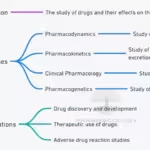
What is Pharmacology? Pharmacology is the branch of science concerned with the study of drugs, their actions on living systems, mechanisms of action, uses in treatment, and adverse effects. Pharmacology serves as the critical link between basic sciences (chemistry, physiology, biochemistry) and clinical medicine, guiding rational therapeutics. Core Divisions of Pharmacology Division Description Pharmacodynamics Study of … Read more

Pharmacology of Alcohols

Pharmacology of alcohols

Introduction “Alcohol” in pharmacology typically refers to ethanol, the psychoactive ingredient of alcoholic beverages, but also includes toxic congeners—methanol, ethylene glycol, isopropanol. All share the –OH functional group yet differ in metabolism and clinical impact. This review contrasts their pharmacokinetics, pharmacodynamics, toxicology and therapeutic considerations. Ethanol Pharmacokinetics Step Enzyme / Cofactor Product Inhibitors / Variants … Read more

Thyroid and Antithyroid Drugs

thyroid and antithyroid drugs

Introduction The thyroid gland plays a pivotal role in metabolic homeostasis, influencing functions such as energy expenditure, heat generation, and macronutrient metabolism. Dysregulation of thyroid hormone production can lead to disorders ranging from hypothyroidism (metabolic slowing, lethargy) to hyperthyroidism (excess metabolism, heightened sympathetic drive), each of which has significant clinical repercussions. The availability of thyroid and antithyroid drugs has transformed the management of … Read more

Oral Contraceptive Pills An Overview

oc pills pharmacology mentor

Introduction Oral contraceptive drugs, employed primarily for preventing unwanted pregnancies, embody a range of formulations with distinct pharmacological profiles to cater to individual needs. Here’s a comprehensive overview of their pharmacology, types, recent advancements, adverse effects, and contraindications: Oral Contraceptive Pills: An Overview Oral contraceptive pills, often simply referred to as “the pill,” are a … Read more

Antiplatelet drugs, Anticoagulants and Fibrinolytics

Pharmacology Mentor

Antiplatelet Drugs Antiplatelet drugs are a class of medications that prevent blood clots from forming. They work by stopping your platelets from sticking together. Antiplatelet drugs are used to avoid blood clots, which can cause heart attacks and strokes. • The main component of arterial thrombi is platelets, and the release of chemicals like ADP, TXA2, and … Read more

Non-Steroidal Anti-Inflammatory Drugs (NSAIDs)

NSAIDs

Non-steroidal anti-inflammatory drugs (NSAIDs) are cornerstone analgesic, antipyretic, and anti-inflammatory agents whose primary mechanism is inhibition of cyclooxygenase (COX) enzymes to reduce prostaglandin and thromboxane synthesis. A complete pharmacology chapter should cover COX biology, detailed classification, pharmacokinetics/dynamics, therapeutic uses, adverse effects, drug interactions, special populations, and evidence-based risk mitigation strategies from standard pharmacology texts and … Read more

Hematinics and iron chelators

Hematinics

Hematinics are agents that supply essential substrates for erythropoiesis—principally iron, vitamin B12, and folate—while iron chelators remove excess iron from overload states; together, these drugs correct deficiency anemias and mitigate transfusional siderosis when used with appropriate monitoring and route selection. This chapter details classification, mechanisms, pharmacokinetics, indications, dosing, adverse effects, interactions, and evidence-based cautions for … Read more