Oral Anticoagulant Drugs

Oral Anticoagulant Drugs
Introduction to Oral Anticoagulant Drugs What are Oral Anticoagulant Drugs? Oral anticoagulant drugs are a class of medication that help prevent blood clot formation. They work by interfering with the body’s natural coagulation process, which is the method by which blood forms clots. Unlike antiplatelet drugs, which prevent the aggregation of platelets, anticoagulants target the … Read more

An Overview on Anticoagulant Drugs

Anticoagulant Drugs

Introduction to Anticoagulant Drugs What are Anticoagulant Drugs? Anticoagulant drugs, commonly referred to as blood thinners, are a class of medication that prevent blood clot formation. They play a crucial role in the management of various cardiovascular disorders by reducing the risk of clots forming in blood vessels, thereby preventing strokes, heart attacks, and other … Read more

An Overview on Antiplatelet Drugs

Antiplatelet Drugs

Introduction to Antiplatelet Drugs What are Antiplatelet Drugs? Antiplatelet drugs are a class of medications that inhibit platelet aggregation, which is the clumping together of platelets in the blood. This process is essential for the formation of blood clots. These drugs play a crucial role in preventing clot formation in arteries, a common cause of … Read more

Structure-Activity Relationship (SAR)

structure activity relationships - SAR

Introduction to Structure-Activity Relationship (SAR) Understanding SAR: Definition and Importance The Structure-Activity Relationship (SAR) is a critical concept in medicinal chemistry and pharmacology, referring to the relationship between a chemical or molecular structure and its biological activity in the body. Essentially, it involves understanding how changes in the molecular structure of a substance can influence … Read more

Pre-Anesthetic Medication in Clinical Practice

Pre-Anesthetic Medication in Clinical Practice

Introduction Pre-anesthetic medications (premedicants) have been integral to anesthetic practice since the early days of surgical anesthesia. Their rational use is essential for improving patient comfort, reducing perioperative morbidity, minimizing anesthetic requirements, and managing surgery-related stress responses. These drugs are selected based on individual patient factors, surgical procedure, type of anesthesia planned, and institutional protocols. … Read more

Intravenous Anesthetics

Intravenous Anesthetics

Introduction Understanding Intravenous Anesthetics Intravenous anesthetics are a class of drugs used to induce and maintain anesthesia, administered directly into the bloodstream. They are essential for rapid induction of anesthesia, providing a controlled and reversible state of unconsciousness, making them indispensable in modern surgical practices. Significance in Anesthesia Practice Intravenous anesthetics play a pivotal role … Read more

General anesthetics

General anesthetics

Introduction Understanding General Anesthetics General anesthetics are a diverse group of drugs used to induce a reversible loss of consciousness, providing pain relief and muscle relaxation during surgical procedures. They play a critical role in modern medicine by allowing patients to undergo complex and potentially painful surgeries safely and comfortably. Role in Modern Surgery In … Read more

Inhalation Anesthetics

Inhalation Anesthetics

Introduction Inhalation anesthetics play a central role in modern anesthesia, enabling practitioners to achieve and maintain general anesthesia during surgical procedures. Unlike intravenous agents, which rapidly induce unconsciousness, inhalation anesthetics are administered via inhaled gases or vapors, typically using advanced anesthesia machines and vaporizers. These agents act on the central nervous system (CNS) to produce loss of consciousness, analgesia, and … Read more

Pharmacology of Thionamides

Pharmacology of Thionamides

Introduction Among the oldest and most widely used agents for hyperthyroidism, thionamides (alternatively “thioureas”) remain essential in patient care. These medications include propylthiouracil (PTU), methimazole, and carbimazole, commonly referred to as antithyroid or thyroid-inhibiting drugs (Goodman & Gilman, 2018). Their core mechanism involves inhibiting the synthesis of thyroid hormones, thus reducing circulating levels of T3 (triiodothyronine) and T4 (thyroxine). Whether prescribed to stabilize newly diagnosed Graves’ disease, manage toxic nodular goiter, … Read more

Tocilizumab: The Humanized IL-6 Receptor Inhibitor

Tocilizumab-The Humanized IL-6 Receptor Inhibitor

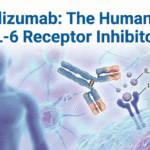
Tocilizumab, a humanized monoclonal antibody designed to target the IL-6 receptor, is revolutionizing the treatment of several inflammatory conditions. This comprehensive guide provides insights into how tocilizumab works, its uses, administration methods, and the safety profile based on the mechanism illustrated in the accompanying image. What is Tocilizumab? Tocilizumab is an innovative therapy that has … Read more