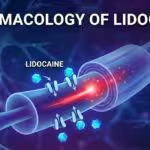
Pharmacology of Lidocaine

lignocaine featured image

Introduction Lidocaine is one of the most commonly used local anesthetics and antiarrhythmic agents in clinical medicine. Since its first introduction in the 1940s, lidocaine has revolutionized minor surgical procedures, regional anesthesia, and the treatment of cardiac arrhythmias, particularly those of ventricular origin (Katzung, 2020). With both amide-based local anesthetic properties and significant sodium channel blocking capabilities, lidocaine’s versatility renders it a mainstay in … Read more
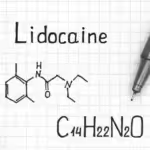
Antiarrhythmic drugs: Lidocaine (Class 1B)

lidocaine

If you trained in a time when every crash cart seemed to include “lido,” you remember lidocaine as the go-to antidote for ugly ventricular ectopy. Today, it has a more selective role—but when it is the right drug, it can be lifesaving. Lidocaine (also known as lignocaine) is a prototypical Class 1B antiarrhythmic with rapid … Read more

Sodium Channel Blockers (SCBs)

Sodium Channel Blockers

Introduction Sodium (Na⁺) channels are integral membrane proteins responsible for the rapid upstroke (phase 0) of the action potential in excitable cells such as neurons and cardiomyocytes. By selectively perming sodium ions across membranes, these channels facilitate depolarization, triggering electrical signals essential for neurotransmission, skeletal muscle contraction, and cardiac conduction. As a result, therapeutic modulation … Read more