Sympatholytics/Adrenergic antagonists

adrenergic antagonists or sympatholytics

Introduction Have you ever wondered about the drugs that counteract the effects of the sympathetic nervous system? Sympatholytics, also known as adrenergic antagonists, are one such class of drugs. This article will dive into the classification, pharmacological actions, clinical uses, adverse effects, and contraindications of different types of sympatholytic drugs. So, let’s get started! Sympatholytics … Read more

Parasympatholytics/Cholinergic antagonists

Cholinergic antagonists - Parasympatholytics

Introduction Parasympatholytics, also known as anticholinergics, are a class of drugs that inhibit the actions of the neurotransmitter acetylcholine on parasympathetic nerve endings. These drugs can be classified based on their mode of action and target sites. This article will delve into the classification of parasympatholytics, individual drug pharmacological actions, clinical uses, adverse effects, atropine … Read more

Atropine/Belladonna/Datura Poisoning: Causes, Symptoms, and Treatment

atropine - belladonna poisoning

1 · Overview Atropine, hyoscyamine and scopolamine are tropane alkaloids concentrated in plants of the Solanaceae family—most notably Atropa belladonna (deadly nightshade) and Datura stramonium (jimson-weed). These compounds act as potent competitive antagonists at muscarinic acetylcholine receptors, producing the classic “anticholinergic toxidrome.” Untreated, severe poisoning may culminate in seizures, hyperthermia, rhabdomyolysis, dysrhythmia or respiratory failure … Read more

Parasympathomimetics/Cholinergic agonists

parasympathomimetics

Introduction Parasympathomimetics — also referred to as cholinergic agonists or muscarinic agonists—are a class of medications that enhance or mimic the actions of the parasympathetic nervous system (PNS). The PNS is one subdivision of the autonomic nervous system, often described as the “rest and digest” branch. Through stimulation of acetylcholine (ACh) receptors, parasympathomimetics elicit various physiological responses such … Read more

Sympathomimetics/Adrenergic agonists

sympathomimetics

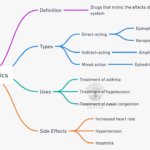
1 · Introduction Sympathomimetic agents—or adrenergic agonists—comprise a pharmacological super-family that mimics or amplifies the actions of endogenous catecholamines (noradrenaline, adrenaline and dopamine) at α1, α2, β1, β2, β3 and dopaminergic receptors. Their capacity to modulate cardiovascular tone, airway calibre, intra-ocular pressure, central arousal and metabolic flux renders them indispensable across emergency medicine, anaesthesia, respiratory … Read more

Adrenaline/Epinephrine-Induced Fight, Flight and Fright Response

Drugs acting on Autonomic Nervous System (ANS)

Understanding the action of drugs on the autonomic nervous system (ANS) can be simplified by drawing a comparison with the adrenaline/epinephrine-induced fight, flight, and fright response. This response, also known as the acute stress response, is the body’s physiological reaction to perceived harmful events, attacks, or threats to survival. To better comprehend the role of … Read more