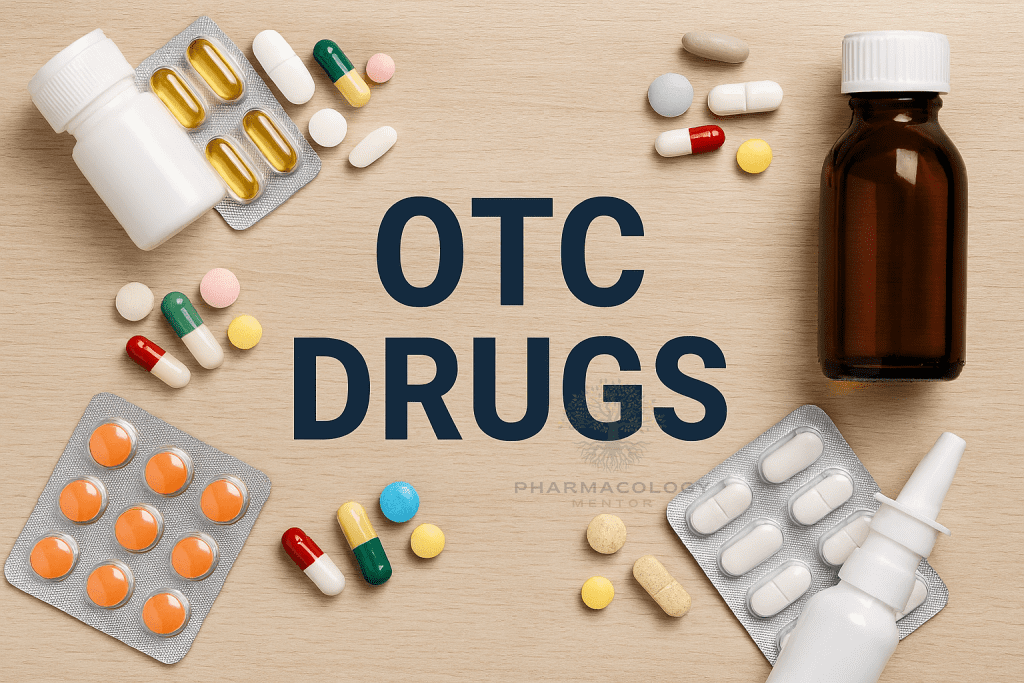
Main Takeaway: Over-the-counter (OTC) drugs are non-prescription medications available directly to consumers for self-treatment of common ailments. With over 800 active ingredients comprising more than 100,000 products, OTC medications provide safe and effective treatment when used as directed, though they require careful attention to labeling and proper usage to avoid potential risks.
1. Definition and Regulation
Over-the-counter drugs are medicines sold directly to consumers without requiring a prescription from a healthcare professional. Unlike prescription drugs that require medical supervision, OTC medications have been deemed safe and effective for public use when consumers can:
- Self-diagnose the condition requiring treatment
- Self-select the appropriate medication
- Self-manage their condition using product labeling
In the United States, OTC drugs are regulated by the Food and Drug Administration (FDA) through two primary pathways:
OTC Monograph System
The majority of OTC products are marketed under the monograph system, established in the 1970s. Monographs serve as “recipe books” that specify:
- Acceptable active ingredients and concentration ranges
- Dosage forms and administration routes
- Required labeling, warnings, and directions
- Patient populations (age, gender restrictions)
- Permitted product claims
New Drug Application (NDA) Process
Some OTC products that don’t fit within existing monographs require individual FDA approval through the traditional NDA pathway.
2. Major OTC Drug Categories
OTC medications are organized into numerous therapeutic categories:
| Category | Examples | Common Active Ingredients |
|---|---|---|
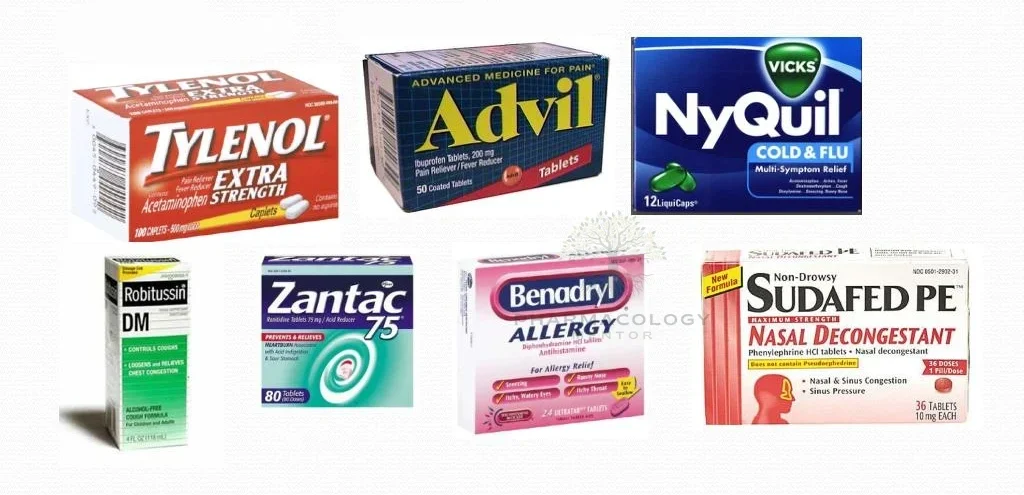
| Pain Relief | Tylenol, Advil, Motrin | Acetaminophen, Ibuprofen, Naproxen |
| Cold & Cough | Robitussin, Sudafed | Dextromethorphan, Guaifenesin |
| Allergies | Claritin, Zyrtec, Benadryl | Loratadine, Cetirizine, Diphenhydramine |
| Digestive Health | Pepto-Bismol, Tums, Prilosec | Bismuth subsalicylate, Calcium carbonate, Omeprazole |
| Skin Care | Hydrocortisone creams | Hydrocortisone, Benzoyl peroxide |
Pain Relief Medications
OTC pain relievers fall into two main categories:
Acetaminophen (Tylenol)
- Mechanism: Blocks pain signals and reduces fever
- Best for: Fever, headaches, arthritis pain, safe for children and pregnant women
- Limitation: Does not treat inflammation
- Safety concern: Can damage liver, especially with alcohol use
NSAIDs (Non-Steroidal Anti-Inflammatory Drugs)
- Examples: Ibuprofen (Advil, Motrin), Naproxen (Aleve), Aspirin
- Mechanism: Reduce inflammation, pain, and fever
- Best for: Inflammatory conditions, muscle pain, menstrual cramps
- Safety concerns: Can irritate stomach, affect kidneys
3. Safety Considerations and Drug Facts Labeling
All OTC products must display a standardized “Drug Facts” label that includes:
- Active ingredients and their purposes
- Uses and indications
- Warnings and contraindications
- Directions for proper use
- Inactive ingredients
Key Safety Questions for Consumers
Before using any OTC medication, consumers should consider:
- What is the purpose of this drug?
- Should I use this product for my condition?
- Are there possible drug interactions or food interactions?
- What are the potential side effects?
- How much should I take and for how long?
- When should I stop and consult a doctor?
4. Current Usage Patterns and Concerns
Growing Prevalence
OTC medication usage has dramatically increased:
- 2020: 37.7% of population used OTC drugs
- 2023: 85.4% usage rate with significant economic impact (79.6%)
Common Misuse Patterns
Research identifies several concerning trends:
- 15.5% of users exceed recommended dosages
- 66% admit to sharing medications with others
- 88.5% of healthcare students demonstrate poor OTC practices
- Mixing multiple OTC medications without professional guidance
High-Risk Behaviors
Particular concern exists regarding misuse of certain OTC drugs for recreational purposes:
- Dextromethorphan (cough suppressant) – can cause hallucinations, poor motor control
- Loperamide (anti-diarrheal) – potential for serious cardiac effects
- Diphenhydramine (antihistamine) – sedative effects when misused
5. Regulatory Updates and Future Directions
CARES Act Reforms (2020)
The Coronavirus Aid, Relief, and Economic Security Act modernized OTC drug regulation by replacing the slow rulemaking process with a more efficient administrative order system.
OTC Monograph Drug User Fee Program (OMUFA)
This FDA program expedites review processes while maintaining safety standards by imposing user fees on manufacturers, allowing FDA to allocate additional resources for timely assessments.
6. International Variations
Regulatory approaches vary globally. For example:
- Australia: Uses “AUST R” identification numbers and categorizes OTC medicines into general sales, pharmacy medicines, and pharmacist-only medicines
- India: Currently lacks specific unifying OTC regulations, impacting both healthcare accessibility and patient safety
Over-the-counter medications represent a vital component of modern healthcare, providing accessible treatment for common ailments while requiring informed consumer decision-making and proper regulatory oversight to ensure public safety.
📚 AI Pharma Quiz Generator
🎉 Quiz Results
Medical Disclaimer
The medical information on this post is for general educational purposes only and is provided by Pharmacology Mentor. While we strive to keep content current and accurate, Pharmacology Mentor makes no representations or warranties, express or implied, regarding the completeness, accuracy, reliability, suitability, or availability of the post, the website, or any information, products, services, or related graphics for any purpose. This content is not a substitute for professional medical advice, diagnosis, or treatment; always seek the advice of your physician or other qualified health provider with any questions you may have regarding a medical condition and never disregard or delay seeking professional advice because of something you have read here. Reliance on any information provided is solely at your own risk.