
By using this site, you agree to the Privacy Policy and Terms of Use.
Accept
Pharmacology MentorPharmacology MentorPharmacology Mentor
  • Home
  • Bookmarks
  • Pages
    • Terms and conditions
    • Submit a Topic or Chapter
    • Ask for a topic
    • Copyright Statement
    • Privacy Policy
    • Contact
    • About
  • Quizzes
    • Quiz on Antihyperlipidemics
    • Quiz on Antihypertensives
    • Quiz on Antiarrhythmics
    • Quiz on Drugs for CCF
    • Practice Quizzes on Antidiabetic drugs
    • Practice Quizzes on Drugs used in GI Disorders
    • CVS Post lab Quiz
    • Quiz on Pharmacokinetics and Pharmacodynamics
    • Drugs acting on CNS – All CNS topics EXCEPT NSAIDs
    • Drugs acting on ANS
    • Antimicrobial Chemotherapy: Antiprotozoal and antihelminthic drugs
    • Antimicrobial Chemotherapy – Antimalarial Drugs
    • Antimicrobial Chemotherapy – Antiviral and antifungal drugs
    • OC Pills
    • Quizzes at MedQuizzify
  • Blog
  • Chapters
    • General
    • CVS
    • Antimicrobial
    • Neuropharmacology
    • ANS
    • PNS
    • GI
    • Endocrine
    • Hematology
    • miscellaneous
  • Tools
    • Pharma Tools
    • Medical Tools
    • Topic Cards
      • Routes of drug administration
    • Drug Cards
      • Buspirone
      • Metformin
      • Atropine
Search
  • Advertise
© 2024 Pharmacology Mentor. All Rights Reserved.
Reading: Preclinical Trials: Things You Need to Know
Share
Sign In
Notification Show More
Font ResizerAa
Pharmacology MentorPharmacology Mentor
Font ResizerAa
Search
  • Home
  • Blog
  • Bookmarks
  • Terms and conditions
  • Submit a Topic or Chapter
  • Ask for a topic
  • Copyright Statement
  • Contact
  • Quizzes
    • Quiz on Antihyperlipidemics
    • Quiz on Antiarrhythmics
    • Quiz on Drugs for CCF
    • Quiz on Antihypertensives
    • Practice Quizzes on Antidiabetic drugs
    • Practice Quizzes on Drugs used in GI Disorders
    • Quiz on Pharmacokinetics and Pharmacodynamics
    • Drugs acting on CNS – All CNS topics EXCEPT NSAIDs
    • NSAIDs
    • CVS Post lab Quiz
    • Drugs acting on ANS
    • Antimicrobial Chemotherapy – Antimalarial Drugs
    • Antimicrobial Chemotherapy: Antiprotozoal and antihelminthic drugs
    • Antimicrobial Chemotherapy – Antiviral and antifungal drugs
    • OC Pills
    • Quizzes at MedQuizzify
  • Medical Tools
  • Pharmacology Tools
  • About
  • Topic Cards
    • Routes of drug administration
  • Drug Cards
    • Buspirone
    • Metformin
    • Atropine
Have an existing account? Sign In
Follow US
  • Advertise
© 2024 Pharmacology Mentor. All Rights Reserved.
Pharmacology Mentor > Blog > Pharmacology > Clinical Pharmacology > Preclinical Trials: Things You Need to Know
Clinical PharmacologyPharmacology

Preclinical Trials: Things You Need to Know

Last updated: 2025/12/02 at 5:25 PM
Pharmacology Mentor 117 Views
Share
9 Min Read
Preclinical Trials
#Preclinical Trials
SHARE
Table of Contents
Introduction: The Gatekeepers of Drug DevelopmentWhat Are Preclinical Trials?Phase 1: In Vitro Studies (The “Test Tube” Phase)High-Throughput Screening (HTS)Key In Vitro AssaysPhase 2: Safety Pharmacology (The “Vital Systems”)Phase 3: Toxicology Studies (Defining the Limits)Types of Toxicology StudiesCalculating the Human Dose: The NOAELAnimal Models in ResearchWhy Animals?Common ModelsEthical Considerations: The 3RsThe Pros and Cons of Preclinical TrialsConclusionFAQs

Introduction: The Gatekeepers of Drug Development

Preclinical trials are the cornerstone of medical research and development. They serve as the critical “gatekeeper” stage in the long journey of bringing a new drug to market. While often simplified as “animal testing,” preclinical development is a highly regulated, scientifically rigorous process designed to bridge the gap between a chemical discovery and a human patient.

In regulatory terms (such as those of the FDA), the ultimate goal of preclinical trials is to gather enough safety data to file an Investigational New Drug (IND) application. Without a successful IND, a drug cannot legally enter Clinical Trials (Phase I-III).

Crucially, these studies must be conducted under Good Laboratory Practice (GLP) regulations. GLP is a strict quality system concerned with the organizational process and conditions under which studies are planned, performed, monitored, and reported. Data generated without GLP compliance is generally rejected by regulatory authorities.
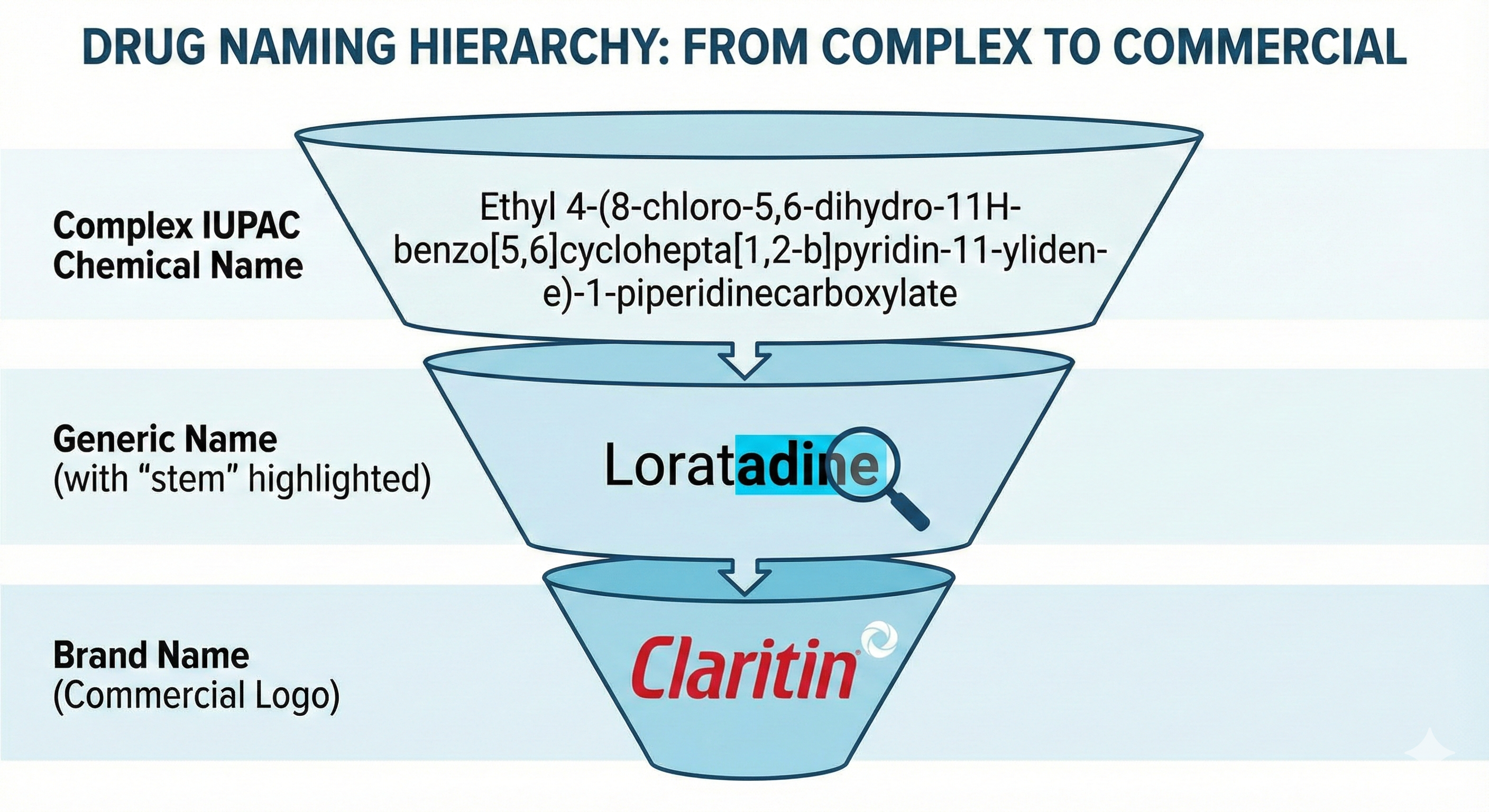
drug naming hierarchy

What Are Preclinical Trials?

Preclinical trials are scientific studies conducted on non-human subjects—specifically in vitro (test tubes/cells) and in vivo (animals)—to evaluate the safety and efficacy of a new molecular entity (NME).

Unlike clinical trials, which focus on “does it work in people?”, preclinical trials focus on two key questions:

  1. Is it safe enough to give to humans? (Safety Pharmacology & Toxicology)
  2. Does it have a plausible mechanism of action? (Pharmacodynamics)

Phase 1: In Vitro Studies (The “Test Tube” Phase)

Before a drug ever enters a living system, it undergoes rigorous screening in the lab.

High-Throughput Screening (HTS)

Modern pharmacology utilizes High-Throughput Screening, where automated robots test thousands of chemical compounds against specific biological targets (like a receptor or enzyme) to identify “hits.”

Key In Vitro Assays

  • Cell Culture Studies: Using specific cell lines (e.g., CHO or HEK cells) to see if the drug binds to the intended target.
  • Permeability Studies (Caco-2): Determining if the drug can cross the gut wall (oral bioavailability) or the Blood-Brain Barrier (BBB).
  • Genotoxicity Screening (Ames Test): A critical early test using bacteria (Salmonella typhimurium) to check if the compound causes DNA mutations, which could lead to cancer.
  • Metabolic Stability: Using liver microsomes to see how quickly the liver enzymes (Cytochrome P450) break down the drug.

Phase 2: Safety Pharmacology (The “Vital Systems”)

Reference: ICH S7A Guidelines
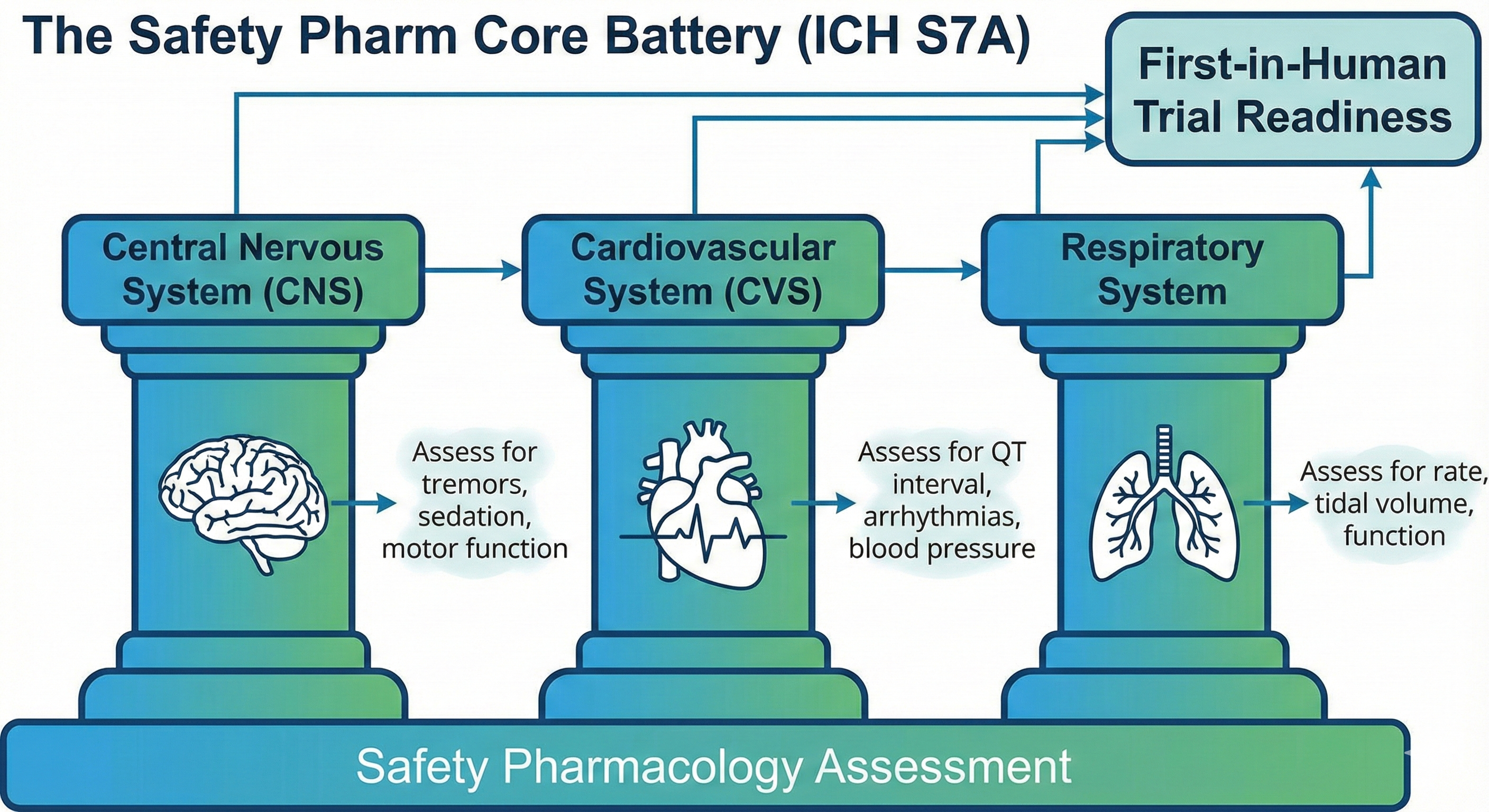
ICH57A

This is a distinct and critical step often confused with general toxicology. According to the International Council for Harmonisation (ICH) guidelines, Safety Pharmacology specifically assesses whether a drug impairs the vital functions of the body at therapeutic doses.

Regulatory bodies require a “Core Battery” of tests to be completed before the first human dose:

  1. Central Nervous System (CNS): Assessed (usually in rodents) using the Irwin Test or Functional Observation Battery (FOB). Researchers look for tremors, sedation, convulsions, or changes in motor activity.
  2. Cardiovascular System (CVS): The most critical safety check. Drugs are screened for QT interval prolongation (using the hERG assay in vitro and telemetry in dogs/monkeys). A prolonged QT interval can cause Torsades de Pointes, a potentially fatal heart arrhythmia.
  3. Respiratory System: Measuring tidal volume and respiratory rate to ensure the drug doesn’t suppress breathing.

Phase 3: Toxicology Studies (Defining the Limits)

While Safety Pharmacology looks at “vital signs” at therapeutic doses, Toxicology pushes the dose higher to find out what damage the drug causes when taken in excess.

Types of Toxicology Studies

  • Acute Toxicity: Assesses the effects of a single, high dose. This helps identify the target organs of toxicity (e.g., does it damage the liver or the kidneys?).
  • Sub-Acute / Sub-Chronic Toxicity: Repeated dosing (usually 2 weeks to 3 months) to simulate the duration of early human trials.
  • Chronic Toxicity: Long-term exposure (6 months to 2 years) required for drugs intended for chronic human use (like blood pressure medication).
  • Reproductive Toxicity: (Segment I, II, III studies) Assessing fertility, teratogenicity (birth defects), and development. This is mandatory to prevent tragedies like Thalidomide.

Calculating the Human Dose: The NOAEL

One of the most important outputs of preclinical trials is the NOAEL (No Observed Adverse Effect Level).
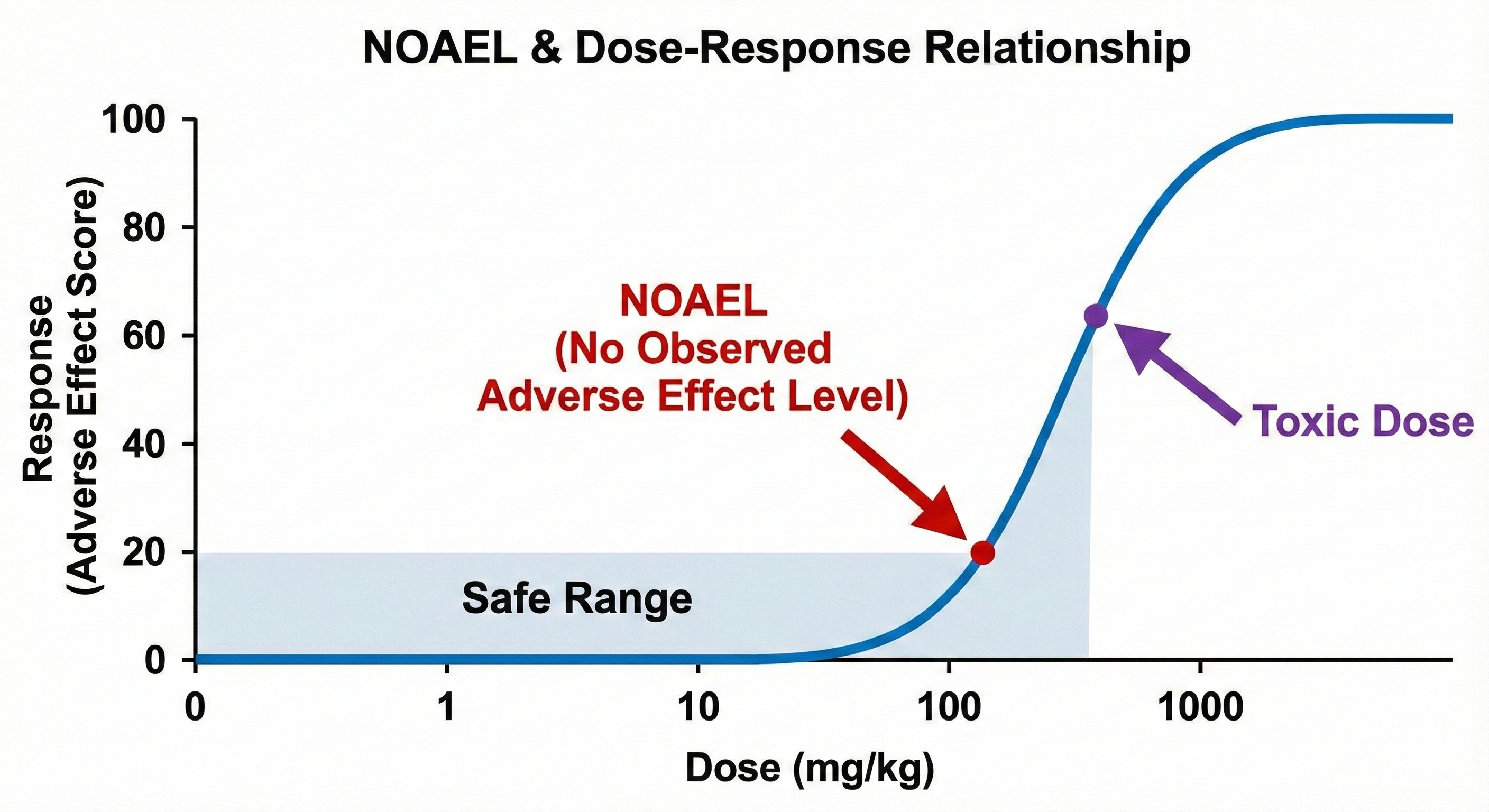
NOAEL

The NOAEL is the highest dose tested in animals that produces no significant adverse effects. Pharmacologists use the NOAEL to calculate the Maximum Recommended Starting Dose (MRSD) for humans. typically, the human starting dose is set at a safety factor (often 1/10th) of the NOAEL to ensure the first human volunteers are safe.

Animal Models in Research
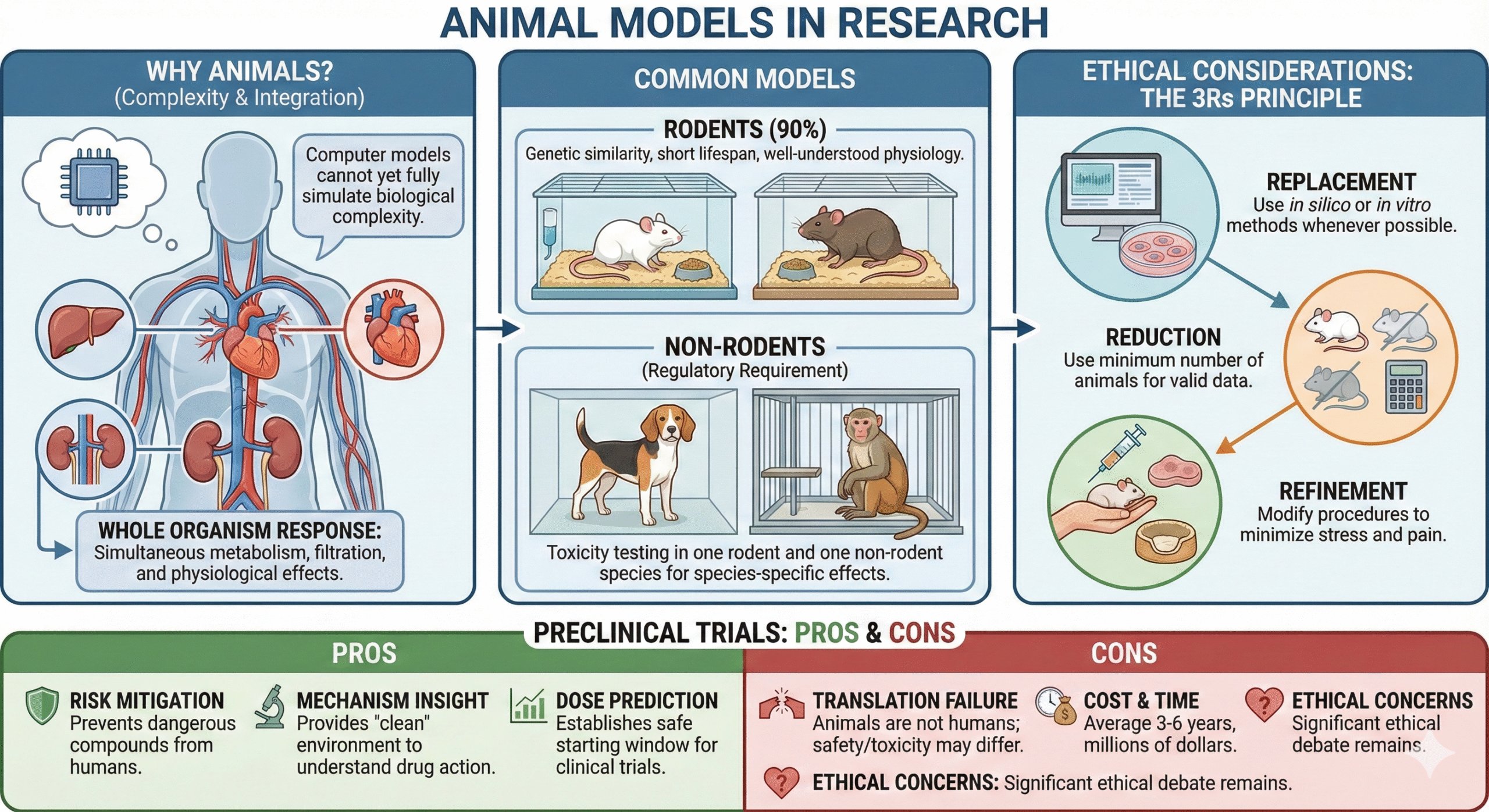
animal models in research

Why Animals?

Despite technological advances, computer models cannot yet fully simulate the complexity of a whole living organism—such as how a drug affects blood pressure while simultaneously being metabolized by the liver and filtered by the kidneys.

Common Models

  • Rodents (Mice/Rats): Used for 90% of studies due to genetic similarity, short lifespan, and well-understood physiology.
  • Non-Rodents (Dogs/Primates): Regulatory guidelines generally require toxicity testing in one rodent and one non-rodent species to identify species-specific effects.

Ethical Considerations: The 3Rs

Modern pharmacology is bound by strict ethical standards. Researchers must adhere to the 3Rs principle:

  1. Replacement: Using computer simulations (in silico) or cell cultures (in vitro) instead of animals whenever possible.
  2. Reduction: Using the absolute minimum number of animals necessary to get statistically valid data.
  3. Refinement: Modifying procedures to minimize stress and pain (e.g., better anesthesia, comfortable housing).

The Pros and Cons of Preclinical Trials

Pros

  • Risk Mitigation: Prevents dangerous compounds from reaching humans.
  • Mechanism Insight: Provides a “clean” environment to understand exactly how a drug works.
  • Dose Prediction: Establishes the safe starting window for clinical trials.

Cons

  • Translation Failure: Animals are not humans. A drug might be safe in a rat but toxic to a human (and vice versa).
  • Cost & Time: It takes average 3-6 years and millions of dollars to complete this phase.
  • Ethical Concerns: The use of animals remains a significant ethical debate.

Conclusion

Preclinical trials are far more than just “testing on mice.” They are a sophisticated, highly regulated science that combines high-tech molecular biology with systemic physiology. By identifying the NOAEL and clearing the Core Battery of safety tests, preclinical researchers ensure that when a clinical trial begins, the risk to human participants is minimized as much as science allows.

The Comprehensive Guide to Clinical Trials

FAQs

What is the main purpose of preclinical trials?
The main purpose is to evaluate the safety and efficacy of a new medical treatment before it is tested on humans.

How long do preclinical trials usually last?
The duration can vary, but it usually takes several months to a few years.

Are preclinical trials mandatory?
Yes, they are a regulatory requirement before moving on to clinical trials involving humans.

What are the alternatives to animal testing in preclinical trials?
Alternatives include in vitro studies and computer simulations.

How are preclinical trials funded?
Pharmaceutical companies, government grants, or research institutions usually fund them.

Do preclinical trials guarantee the success of a new treatment?
No, they are an initial step in the research and development process.

How to cite this page - Vancouver Style
Mentor, Pharmacology. Preclinical Trials: Things You Need to Know. Pharmacology Mentor. Available from: https://pharmacologymentor.com/the-ultimate-guide-to-preclinical-trials-things-you-need-to-know/. Accessed on December 16, 2025 at 03:55.
Guest Mode: You can take quizzes, but log in or register to save your progress!

📚 AI Pharma Quiz Generator

Instructions: This quiz will be generated from the current page content. Click "Generate Quiz" to start.

Generating quiz questions using AI...

🎉 Quiz Results

Medical Disclaimer

The medical information on this post is for general educational purposes only and is provided by Pharmacology Mentor. While we strive to keep content current and accurate, Pharmacology Mentor makes no representations or warranties, express or implied, regarding the completeness, accuracy, reliability, suitability, or availability of the post, the website, or any information, products, services, or related graphics for any purpose. This content is not a substitute for professional medical advice, diagnosis, or treatment; always seek the advice of your physician or other qualified health provider with any questions you may have regarding a medical condition and never disregard or delay seeking professional advice because of something you have read here. Reliance on any information provided is solely at your own risk.

You Might Also Like

A Comprehensive Treatise on Drug Nomenclature, Regulatory Frameworks, and the Architecture of Patient Safety

Antiarrhythmics – A quick summary

Pharmacotherapy of Peptic Ulcer

Diabetes Mellitus: Pharmacology of Antidiabetic Agents

Steady-State Concentration: Principles, Calculations, and Clinical Application

TAGGED: Drug efficacy, Pharmacology, preclinical, preclinical trials, Side effects, trials

Sign Up For Daily Newsletter

Be keep up! Get the latest breaking news delivered straight to your inbox.

By signing up, you agree to our Terms of Use and acknowledge the data practices in our Privacy Policy. You may unsubscribe at any time.
Share This Article
Facebook Twitter Copy Link Print
Previous Article clinical trials The Comprehensive Guide to Clinical Trials
Next Article skeletal muscle relaxants Skeletal Muscle Relaxants: A Quick Guide
1 Review 1 Review

Leave a review Cancel reply

Your email address will not be published. Required fields are marked *

Please select a rating!

This site uses Akismet to reduce spam. Learn how your comment data is processed.

Visit PharmaGame

Pharmacology Tools

💊

Pharmacology Tools

Search drugs, check interactions, calculate dosing, review side effects, and more.

  • 🔍Drug Search
  • 🔄Interaction Checker
  • 🧮Dosing Calculator
  • 👶Child Dose Calculator
  • 🧪Sample Size Calculator
  • 📋Side Effects
Open Pharmacology Tools

Medical Tools

🩺

Medical Tools

AI-assisted resources to look up definitions, triage symptoms, and reason through cases.

  • 📖Medical Dictionary
  • 📋Symptom Checker
  • 👨‍⚕️Diagnosis Assistant
  • 🧮Medical Calculator
Open Medical Tools

Most Popular Posts

  1. Routes of Drug Administration: A detailed overview (Pharmacology Mentor) (3,225)
  2. Pharmacology of Adrenaline (Pharmacology Mentor) (1,564)
  3. Routes of Drug Administration (Pharmacology Mentor) (1,211)
  4. First-Order vs. Zero-Order Kinetics: What You Need to Know (Pharmacology Mentor) (1,060)
  5. Pharmacokinetics (ADME): an overview (Pharmacology Mentor) (1,060)
  6. Drug Nomenclature: Drug Naming system (Dr. Ambadasu Bharatha) (897)
  7. Pharmacology of Aspirin: A Comprehensive Overview (Pharmacology Mentor) (844)
  8. Pharmacology Definitions and Terminology (Pharmacology Mentor) (727)
  9. Pharmacology of Paracetamol/Acetaminophen (Pharmacology Mentor) (723)
  10. Beta Receptors: A Complete Overview for Medical Professionals (Pharmacology Mentor) (717)

Categories

  • ANS26
  • Antimicrobial35
  • Clinical Pharmacology4
  • CVS32
  • Endocrine22
  • Featured14
  • General50
  • GI16
  • Hematology13
  • miscellaneous31
  • Neuropharmacology38
  • Pharmacology269
  • PNS2
  • Reproductive System10
  • Respiratory System7

Tags

Adverse effects Antibiotics Antiplatelet Drugs Aspirin Benzodiazepines beta-blockers Bioavailability Bipolar disorder calcium channel blockers Carbamazepine Clinical trials contraindications Coronary artery disease Dosage DRC drug absorption Drug Administration Drug classification drug design Drug development Drug discovery Drug Dosage Drug efficacy Drug formulation Drug interactions Drug metabolism Drug regulation Drugs Drug safety Generic drugs Headache Hypertension mechanism of action Medication Myocardial infarction Neurotransmitters Norepinephrine Pharmacodynamics Pharmacokinetics Pharmacological actions Pharmacology Pharmacovigilance Side effects Therapeutic uses Treatment

Latest Articles

drug nomenclature
A Comprehensive Treatise on Drug Nomenclature, Regulatory Frameworks, and the Architecture of Patient Safety
General Pharmacology 2 weeks ago
antiarrhythmic drugs
Antiarrhythmics – A quick summary
CVS Pharmacology 4 weeks ago
peptic ulcer disease
Pharmacotherapy of Peptic Ulcer
GI Pharmacology 2 weeks ago
Featured image on Diabetes
Diabetes Mellitus: Pharmacology of Antidiabetic Agents
Endocrine Pharmacology 4 weeks ago

Stay Connected

Facebook Like
//

Pharmacology Mentor is dedicated to serving as a useful resource for as many different types of users as possible, including students, researchers, healthcare professionals, and anyone interested in understanding pharmacology.

Quick Link

  • Terms and conditions
  • Copyright Statement
  • Privacy Policy
  • Ask for a topic
  • Submit a Topic or Chapter
  • Contact

Top Categories

  • Pharmacology
  • Antimicrobial
  • Neuropharmacology
  • Endocrine
  • Reproductive System
  • miscellaneous

Sign Up for Our Newsletter

Subscribe to our newsletter to get our newest articles instantly!

Pharmacology MentorPharmacology Mentor
Follow US
© 2025 Pharmacology Mentor. All Rights Reserved.
adbanner
AdBlock Detected
Our site is an advertising supported site. Please whitelist to support our site.
Okay, I'll Whitelist
Pharmacology Mentor
Welcome Back!

Sign in to your account

Register Lost your password?