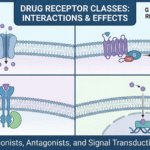
Drug receptor classes

receptor classes

There are four classes of drug receptors, G protein-coupled receptors, ligand-gated ion channels, enzyme-linked receptors (receptor tyrosine kinases and cytokine receptors), and intracellular nuclear receptors, each of which transmits its signals through different, but well-defined pathways, from ligand binding to cellular action. ⓘ Quick overview Most receptor pharmacology is organized into four classes: ligand-gated ion … Read more
Sympathetic and Parasympathetic Receptors: A Comprehensive Overview

Sympathetic and Parasympathetic Receptors

Introduction The autonomic nervous system (ANS) plays a crucial role in regulating various physiological functions in the human body. It consists of two main divisions: the sympathetic nervous system (SNS) and the parasympathetic nervous system (PNS). These systems work in opposition to each other to maintain homeostasis. The effects of the ANS are mediated through … Read more

Pharmacology: An Introduction

pharmacology

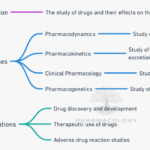
What is Pharmacology? Pharmacology is the branch of science concerned with the study of drugs, their actions on living systems, mechanisms of action, uses in treatment, and adverse effects. Pharmacology serves as the critical link between basic sciences (chemistry, physiology, biochemistry) and clinical medicine, guiding rational therapeutics. Core Divisions of Pharmacology Division Description Pharmacodynamics Study of … Read more