Dose-response relationships

Dose-response relationships
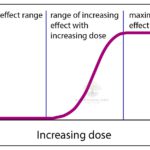
The dose-response relationship is a fundamental concept in pharmacology that describes how the effects of a drug change with varying doses. This relationship is crucial for understanding drug potency, efficacy, and safety. This article delves into the various aspects of dose-response relationships, including pharmacokinetic and pharmacodynamic considerations and their clinical implications. The term “dose-response relationship” … Read more
Drug-Receptor Interactions: Agonists and Antagonists

agonist antagonists

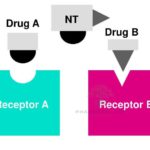
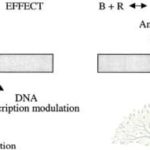
Drug-receptor interactions refer to the binding of drugs to specific receptors, leading to a biological response. These interactions can either be agonistic or antagonistic. Agonists Agonists are drugs that bind to a receptor and activate it, leading to a biological response. There are three types of agonists: Antagonists Antagonists are drugs that bind to a … Read more

Drug Potency and Efficacy

Drug potency and efficacy

Understanding “drug potency” and “drug efficacy” is crucial in pharmacology, as they describe a drug’s performance and are often used to compare different drugs. These terms are closely related to the dose-response curve (DRC). Dose-Response Curve (DRC) and Drug Potency The DRC is a graphical representation that shows the relationship between the dose of a … Read more

Drug Selectivity, Safety, and Risk-Benefit Ratio

Benefits Vs Risks

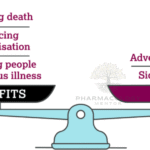
The pharmacological landscape is complex, and drugs often produce a range of effects, both therapeutic and adverse. Understanding these nuances is crucial for clinicians to make informed decisions. This article explores key concepts like dose-response curves (DRCs), therapeutic index, therapeutic window, and the risk-benefit ratio, which are essential for effective and safe drug therapy. Drug … Read more

Drug Specificity: A Key Factor in Pharmacological Actions

Drug Specificity

Drug specificity is an important concept in pharmacology that refers to the range of actions a drug can produce. Understanding drug specificity is crucial for healthcare professionals, researchers, and patients alike, as it helps to predict the drug’s effects and potential side effects. Here, we explore the factors that govern drug specificity and provide examples … Read more

Miscellaneous Antiarrhythmic Agents: Adenosine and others

antiarrhythmic drugs

Adenosine Adenosine is antiarrhythmic agent that is widely used for the investigation and management of both narrow complex and, less often, broad complex tachycardias. It produces a transient block in the atrioventricular node. This effect is mediated by interaction with A1 receptors (reducing cyclic adenosine monophosphate) present on myocytes, thereby activating potassium channels, which increases K+ efflux, … Read more

Class 4 Antiarrhythmic Drugs: Verapamil and Diltiazem

antiarrhythmic drugs

Verapamil and diltiazem are non‑dihydropyridine calcium channel blockers classified as Class IV antiarrhythmics, primarily used to slow atrioventricular (AV) nodal conduction and control ventricular rate in supraventricular tachyarrhythmias such as atrial fibrillation and atrial flutter when left ventricular function is preserved.Both agents inhibit L‑type calcium channels in nodal tissue, reduce SA/AV nodal automaticity and conduction, and … Read more

Antiarrhythmic drugs: Class III – Amiodarone and others

amiodarone-pharmacologymentor

Class III antiarrhythmics predominantly prolong cardiac repolarization via potassium channel blockade, with amiodarone as the prototypical agent and additional options including dofetilide, sotalol, ibutilide, and dronedarone chosen based on structural heart disease, heart failure status, and proarrhythmic risk.These drugs extend action potential duration and the QT interval to prevent reentry, while differing substantially in extracardiac toxicity, need … Read more

Antiarrhythmic drugs: Beta-adrenoceptor-blocking drugs (Class 2)

antiarrhythmic drugs

Introduction Among the diverse categories of drugs used to manage cardiac arrhythmias, beta-adrenoceptor-blocking drugs (beta blockers)—classified as Class 2 antiarrhythmics under the Vaughan Williams scheme—play a pivotal role in controlling aberrant cardiac rhythms, improving survival in many patient populations, and reducing complications of ischemic heart disease. Centrally, they inhibit the effects of endogenous catecholamines (especially norepinephrine … Read more

Antiarrhythmic drugs: Propafenone (Class 1C)

propafenone

Propafenone is a Class 1C antiarrhythmic that produces potent, use‑dependent blockade of fast cardiac Na+ channels with slow unbinding kinetics, resulting in marked conduction slowing and QRS widening, and it also exhibits weak β‑blocking properties that influence rate and bronchial tone in some patients. The following chapter summarizes pharmacology, clinical use, cautions, and monitoring of … Read more