
Pharmacology of Beta-Blockers

beta-blockers

Introduction Beta blockers, also known as β-adrenergic receptor antagonists, are a foundational class of cardiovascular drugs used to treat hypertension, ischemic heart disease, heart failure, arrhythmias, and other conditions. By blocking the actions of catecholamines—particularly norepinephrine (noradrenaline) and epinephrine (adrenaline)—at β-adrenergic receptors, these agents reduce sympathetic overstimulation and exert a range of beneficial clinical effects. … Read more
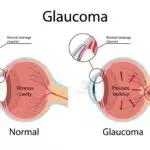
Glaucoma, pathophysiology, treatment and other information

Glaucoma Illustration showing open-angle glaucoma eye anatomy in cartoon style

Glaucoma is a chronic, progressive optic neuropathy characterized by retinal ganglion cell loss and characteristic optic nerve/visual field damage in which lowering intraocular pressure (IOP) slows progression across open‑angle, angle‑closure, and secondary forms. The only proven disease‑modifying therapy is sustained IOP reduction via medications, laser trabeculoplasty, or surgery tailored to mechanism, severity, and risk, with … Read more