Sodium Channel Blockers (SCBs)

Sodium Channel Blockers

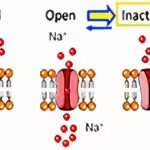
Introduction Sodium (Na⁺) channels are integral membrane proteins responsible for the rapid upstroke (phase 0) of the action potential in excitable cells such as neurons and cardiomyocytes. By selectively perming sodium ions across membranes, these channels facilitate depolarization, triggering electrical signals essential for neurotransmission, skeletal muscle contraction, and cardiac conduction. As a result, therapeutic modulation … Read more

Drugs Used as Mood Stabilizers

mood stabilizers

Introduction Mood disorders—including bipolar disorder, schizoaffective disorder, and certain forms of unipolar depression—are chronic and debilitating mental health conditions. Characterized by pathologic mood swings, from manic or hypomanic states to severe depressive episodes, they entail significant morbidity, mortality (through suicide), and a profound impact on patient quality of life and functioning. Mood stabilizers constitute a cornerstone of … Read more

Anti-manic drugs: Lithium and others

Anti-manic drugs

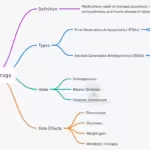
Introduction Mania is a hallmark feature of bipolar disorder and is characterized by heightened mood, increased energy, decreased need for sleep, racing thoughts, grandiosity, and, often, impulsive or reckless behaviors. During manic episodes, individuals experience profound alterations in mood and neurophysiological processes, sometimes leading to severe psychosocial impairments. Treating mania demands a nuanced blend of pharmacologic intervention, psychotherapeutic … Read more

Antidepressant Drugs: A brief note

Antidepressant Drugs or antidepressants

Brief Summary Drugs can increase monoaminergic transmission by inhibiting the metabolism or reuptake of neurotransmitters such as serotonin (5-HT) and noradrenaline (NA). MAO Inhibitors Reuptake Inhibitors I. Tricyclic antidepressants Tricyclic Antidepressants and Serotonin-Noradrenaline Reuptake Inhibitors Tricyclic Antidepressants (TCA) inhibit serotonin and noradrenaline reuptake, leading to increased transmitter concentration in the synaptic cleft. Bupropion also inhibits … Read more

Pharmacology of Antipsychotic Drugs

antipsychotic drugs

Introduction The field of antipsychotic pharmacology continues to evolve as our understanding of the central nervous system advances. Antipsychotic drugs, also known as neuroleptics, are primarily used to manage psychotic disorders such as schizophrenia, bipolar disorder, severe depression with psychotic features, and acute psychosis resulting from various underlying etiologies. Their effectiveness in treating the positive symptoms of schizophrenia—such as delusions, hallucinations, and disorganized … Read more