Pharmacotherapy of Bronchial Asthma

Bronchial asthma

Introduction Asthma is a chronic inflammatory disease of the airways, characterized by bronchial hyperresponsiveness, variable airflow obstruction, and repeated episodes of wheezing, coughing, chest tightness, and dyspnea. This condition affects more than 300 million people worldwide, imposing a significant burden on healthcare systems, impacting economic productivity, and compromising quality of life (Goodman & Gilman, 2018). While the etiology of asthma includes a complex interplay … Read more


Pharmacotherapy of Cough

cough

Introduction Cough is a protective reflex integral to clearing the airways of irritants, secretions, and foreign matter. Without a properly functioning cough mechanism, the risk of airway obstruction, infection, and subsequent respiratory complications increases significantly. Despite this physiological importance, persistent or unproductive cough can be disruptive, painful, and socially distressing. Chronic cough, typically defined as one lasting more than 8 weeks, can also be a … Read more

Pharmacology of Levocetirizine

Levocetirizine

Introduction Levocetirizine is a widely used second-generation H1-antihistamine, often prescribed for the management of allergic rhinitis, urticaria, and other allergic conditions. It is the active R-enantiomer of its racemic counterpart, cetirizine, a drug that has long been established in clinical practice. By isolating the pharmacologically more potent R-enantiomer, levocetirizine offers an improved therapeutic profile, characterized by high efficacy and reduced … Read more

Pharmacology of Antitussives

landscape image of antitussives

Introduction A cough is one of the most common clinical symptoms that prompts patients to seek medical care. Although it serves a critical protective role in clearing secretions, irritants, and pathogens from the airways, an excessive or persistent cough can compromise quality of life, disrupt daily activities, and impair sleep. The term “antitussives” refers to a broad … Read more

Tuberculosis and Its Treatment

Tuberculosis

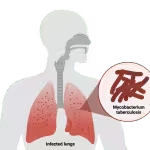
Introduction Tuberculosis (TB) remains a major global health threat, caused by Mycobacterium tuberculosis (M.tb), a slow-growing, aerobic, acid-fast bacillus with a unique, lipid-rich cell wall conferring virulence and intrinsic drug resistance. Diagnosis relies on acid-fast stains, culture, PCR, and clinical criteria. TB is primarily pulmonary but can affect any organ. Increased risk is seen in immunosuppressed individuals, … Read more

Bronchial Asthma and its Treatment

Bronchial asthma

Asthma Bronchial asthma is a condition characterized by bronchial hyperreactivity and inflammation. The activation of IgE bound to mast cells by the antigen leads to the degranulation of mast cells, resulting in the release of various mediators, such as leukotrienes, prostaglandins, platelet-activating factor, histamine, and protease enzymes. These mediators can cause bronchoconstriction and inflammation, leading … Read more

Pharmacotherapy of Cough

cough

Introduction Cough—an involuntary, forceful expulsion of air from the lungs—is one of the most frequent symptoms leading to medical consultation. As a physiologic reflex, cough serves as the body’s first line of defense against respiratory tract infection, foreign bodies, mucus, and irritants. Despite its protective role, chronic or severe cough substantially impairs quality of life, … Read more