The Concept of P-Drugs in Rational Prescribing
p-drugs

Main Takeaway: A P-drug is a prescriber’s personal choice of first-line medicine for a specific indication, selected through a systematic and evidence-based process. Developing and maintaining a personal formulary of P-drugs streamlines decision-making, promotes rational therapeutics, and enhances patient safety. 1. Definition and Purpose of P-Drugs A P-drug (“personal drug”) is not merely the generic … Read more
Unlock the Power of Mnemonics in Pharmacology

mnemonics in pharmacology

Discover the transformative role of mnemonics in pharmacology. Learn how these memory-enhancing tools can simplify complex drug information, making it easier to remember and apply in real-world scenarios. Introduction Pharmacology, the branch of medicine that deals with the uses, effects, and modes of action of drugs, is a vast and complex field. It’s a world … Read more

Adrenaline/Epinephrine-Induced Fight, Flight and Fright Response

Drugs acting on Autonomic Nervous System (ANS)

Understanding the action of drugs on the autonomic nervous system (ANS) can be simplified by drawing a comparison with the adrenaline/epinephrine-induced fight, flight, and fright response. This response, also known as the acute stress response, is the body’s physiological reaction to perceived harmful events, attacks, or threats to survival. To better comprehend the role of … Read more

Immunomodulators and a focus on immunosuppressants

immunomodulators

Immunomodulators are drugs that can either suppress or enhance the activity of the immune system. These are two types: Introduction Immunosuppressants comprise a diverse group of drugs that inhibit or modulate immune system activity. They serve crucial roles in solid-organ transplantation (preventing graft rejection), autoimmune diseases (hindering pathological immune attacks), and certain inflammatory conditions. By downregulating … Read more

Anti-manic drugs: Lithium and others

Anti-manic drugs

Introduction Mania is a hallmark feature of bipolar disorder and is characterized by heightened mood, increased energy, decreased need for sleep, racing thoughts, grandiosity, and, often, impulsive or reckless behaviors. During manic episodes, individuals experience profound alterations in mood and neurophysiological processes, sometimes leading to severe psychosocial impairments. Treating mania demands a nuanced blend of pharmacologic intervention, psychotherapeutic … Read more

An Overview of Essential Medicines

Essential medicines

Essential medicines are drugs selected to meet the priority health care needs of a population, chosen on the basis of public‑health relevance, comparative efficacy and safety, cost‑effectiveness, and assured quality, forming the backbone of rational therapeutics, teaching, and formulary systems. Standard pharmacology textbooks present essential medicines as a framework that links evidence‑based drug selection with … Read more

Various Sources of Drugs

Various sources of drugs

Introduction Drugs have transformed human health by treating infections, alleviating pain, controlling chronic conditions, and improving life expectancy. Historically, treatments emerged from rudimentary herbal or mineral remedies, refined through trial and error. Today, modern pharmacology leverages not only natural products but also advanced synthetic methods, biotechnology, and genetic engineering to create a broad arsenal of … Read more

Nature of the Drugs

Nature of drugs

The nature of drugs encompasses what drugs are, how they are named and sourced, how their physicochemical features determine interactions with biological targets and movement through the body, and how these principles unify pharmacodynamics and pharmacokinetics for rational therapeutics. Standard texts emphasize that drug action is defined by molecular targets and the laws of binding … Read more

Pharmacology: An Introduction

pharmacology

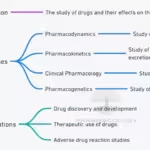
What is Pharmacology? Pharmacology is the branch of science concerned with the study of drugs, their actions on living systems, mechanisms of action, uses in treatment, and adverse effects. Pharmacology serves as the critical link between basic sciences (chemistry, physiology, biochemistry) and clinical medicine, guiding rational therapeutics. Core Divisions of Pharmacology Division Description Pharmacodynamics Study of … Read more