Alzheimer’s Disease and treatment

alzheimers disease

Alzheimer’s disease is a progressive neurodegenerative disorder marked by amyloid and tau protein pathology that leads to gradual decline in memory, function, and behavior; management combines accurate staging, symptomatic cognitive therapies, comprehensive non‑pharmacologic care, and, in eligible early cases, disease‑modifying anti‑amyloid monoclonal antibodies with structured MRI safety monitoring. Evidence‑based symptomatic options include acetylcholinesterase inhibitors and … Read more

Antidepressant Drugs: A brief note

Antidepressant Drugs or antidepressants

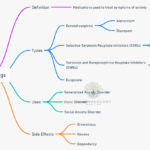
Brief Summary Drugs can increase monoaminergic transmission by inhibiting the metabolism or reuptake of neurotransmitters such as serotonin (5-HT) and noradrenaline (NA). MAO Inhibitors Reuptake Inhibitors I. Tricyclic antidepressants Tricyclic Antidepressants and Serotonin-Noradrenaline Reuptake Inhibitors Tricyclic Antidepressants (TCA) inhibit serotonin and noradrenaline reuptake, leading to increased transmitter concentration in the synaptic cleft. Bupropion also inhibits … Read more

Pharmacology of Antianxiety Drugs

antianxiety drugs

Introduction Anxiety disorders are among the most prevalent mental health conditions globally, encompassing generalized anxiety disorder (GAD), panic disorder, social anxiety, phobias, and more. Characterized by excessive worry, fear, and sympathetic hyperarousal, these conditions can significantly impair quality of life and daily functioning. Antianxiety drugs, also known as anxiolytics, form an essential component of treatment, often … Read more

Pharmacology of Antipsychotic Drugs

antipsychotic drugs

Introduction The field of antipsychotic pharmacology continues to evolve as our understanding of the central nervous system advances. Antipsychotic drugs, also known as neuroleptics, are primarily used to manage psychotic disorders such as schizophrenia, bipolar disorder, severe depression with psychotic features, and acute psychosis resulting from various underlying etiologies. Their effectiveness in treating the positive symptoms of schizophrenia—such as delusions, hallucinations, and disorganized … Read more